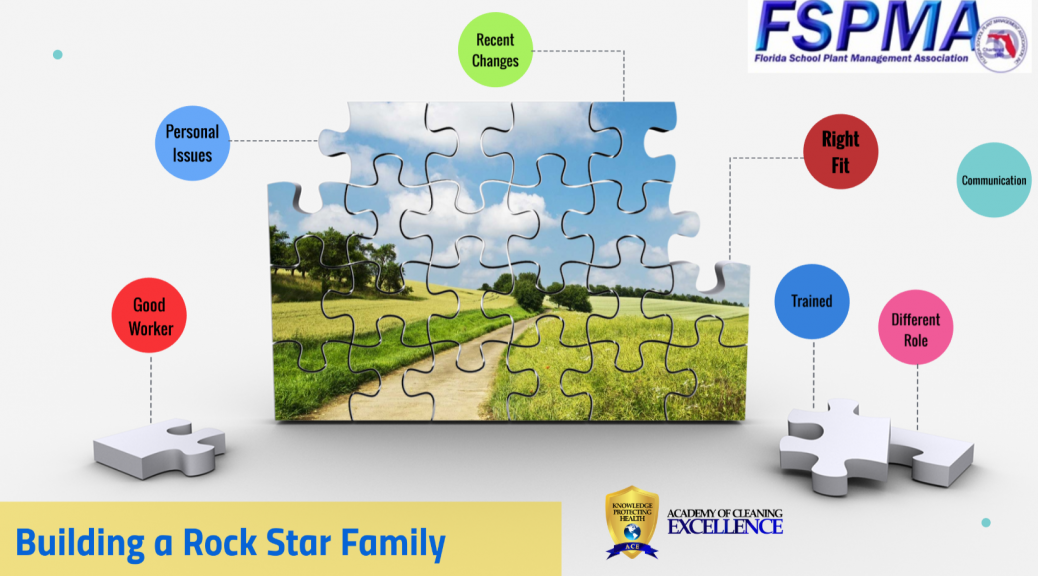
2. Is the employee experiencing personal problems?
If an employee is experiencing personal problems, make sure your source of this information ONLY comes from the employee.
Do NOT use gossip or hearsay when dealing with these situations.
If they just want you to know that they are going through
a tough time with a spouse, then you should recommend counseling or an Employee Assistance Program, if one is provided.
Over the last few weeks, you might have listened to some of them.
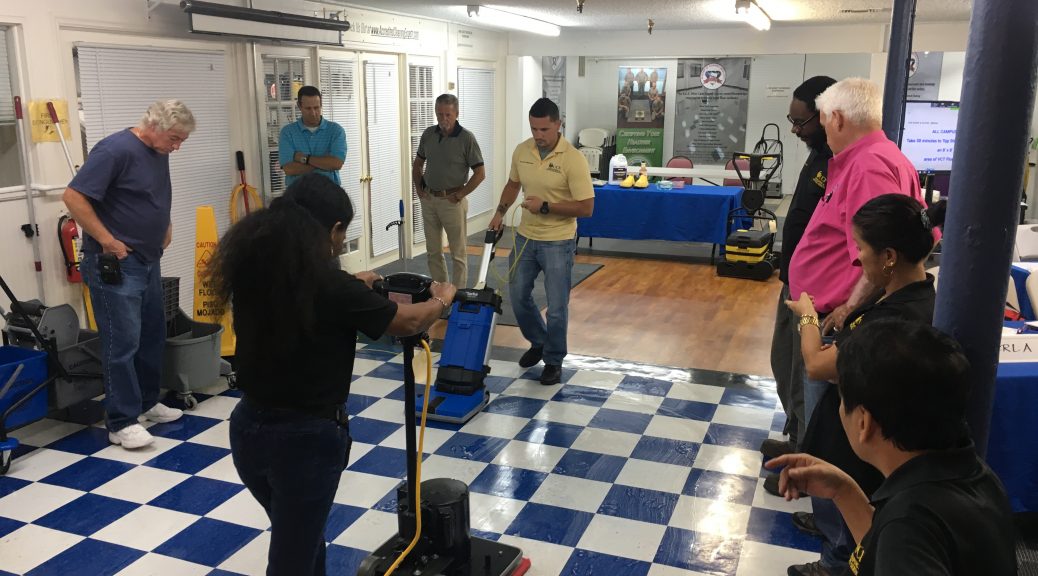
This week, Angel Cruz, Academy Bilingual instructor, and Everett Johnson ll , Beyond Clean editor are talking to you about the programs and options available here.
Standard precautions (SP) are safety practices you observe with every single person who uses your facility because not all the sick people are in hospitals or stay home with the “sniffles”.
For your personal protection, treat every situation as though it was potentially infectious to you or your family.
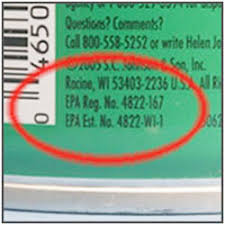
Remember: Because disinfectants are classified as pesticides by the US EPA, these products should always be used in strict accordance with product labels, as the issues at hand are life altering.
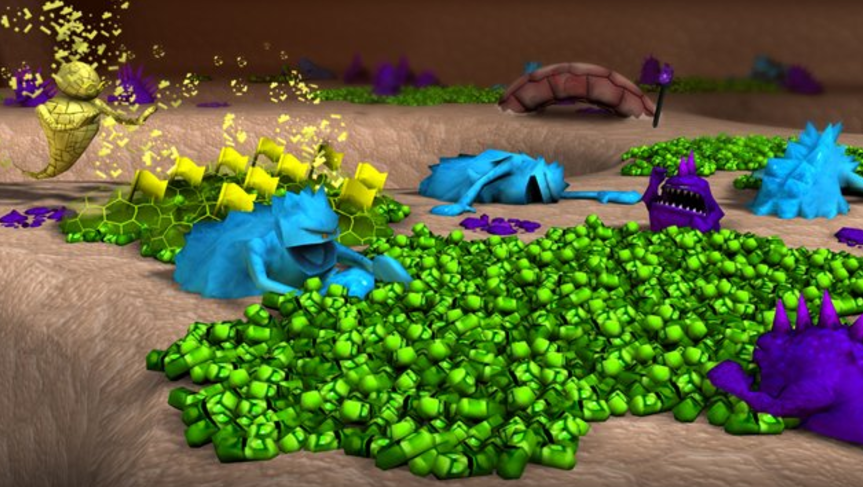
“Germs” is not a scientific term, but they are better understood as bacteria, viruses, or fungi because these are living organisms.
“Germs” is therefore a broad term we all use to refer to these microscopic organisms that can infect humans and animals.
The more proper term for these bad germs would be “pathogenic organisms.”
A virus is an infectious agent, smaller than bacteria, which requires the cells of a living organism to grow or reproduce. Viruses, need a living host to reproduce but can survive for limited periods outside a host.
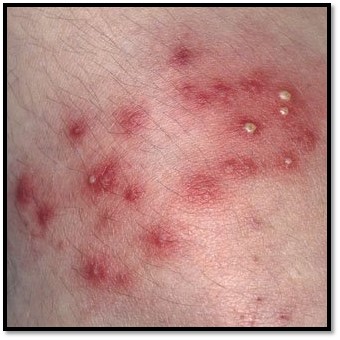
People can carry MRSA and not have any symptoms. These “carriers” can also transmit the bacteria to other people. School is in session this week and we all need to be vigilant in our efforts.
MRSA can be easily spread through skin-to-skin contact and by touching contaminated items. Therefore, it is crucial to take measures to help reduce the spread of MRSA using these practical steps.
• Scrub up – Wash your hands frequently with soap and warm water for at least 15 seconds – the time it takes to sing Happy Birthday twice – or use an alcohol-based hand rub sanitizer.
• Wipe it down – Use a hospital-grade disinfectant with a MRSA kill-claim to disinfect hard surfaces. Make sure to use clean cloths to avoid spreading MRSA from one surface to another.
• Cover your cuts – Keep any nicks or wounds covered with a clean, dry bandage until healed.
• Keep to yourself – Do not share personal items, like towels or razors, that encounter bare skin.












 Spanish