Proactive Infection Prevention

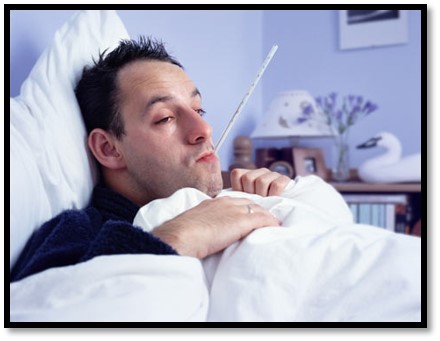
Infection prevention is a proactive process which means that administration must work in concert with the Environmental Health Services team, while keeping workers/students/occupants advised of the “Best Practices” for staying healthy.
If there is the belief a “crack team” is able to sanitize the office and completely eliminate the issue of illness within the facility, then there is a lack of understanding and a lack of shouldering responsibility by management.
Therefore, it is very important that staffs are educated in the understanding of these common diseases and infections.

#AcademyofCleaning

Find your certification course here.  https://classes.academyofcleaning.com/p/infection-prevention
Use coupon code, BUFFER, for 50% off.

Loading

Certified Environmental Services Technician

One professionally educated, properly equipped
housekeeper or custodian
can prevent more infections
than a room full of doctors can cure!

To be proactive in the face of illnesses, the staff must know how to;

  • Recognize the symptoms, and then take steps to contain the issue.
  • Remove the potentially infected person from contact with others.
  • Once it is recognized to be an outbreak of a threatening infection, insure that proper steps are taken according to established protocol.

#AcademyofCleaning

Find your certification course here.  https://classes.academyofcleaning.com/p/infection-prevention
Use coupon code, BUFFER, for 50% off.


Loading

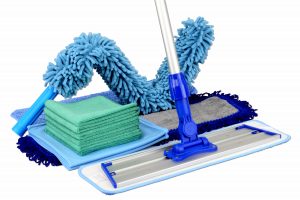
Care and Maintenance of Microfiber Cleaning Products

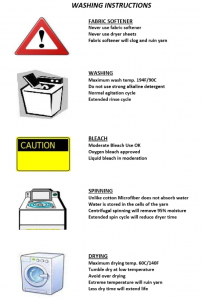
If the towel/wiper/pad becomes too dirty, it will also begin to “streak”. It is then time to wash the towel. This is easily done by just throwing the towel, or any other microfiber cleaning product, into any washing machine and laundering with any soap or detergent you prefer.

A word of caution here; experience tells me you should be careful of the additives in our detergent as they tend to build up in the microfiber, reducing its’ ability to perform as intended. The other restriction in the wash cycle is to NEVER use any type of FABRIC SOFTENER.

The towel will treat the fabric softener as if it was dirt. It will try to store the tiny particles of the softener in the towel fibers and may cause the towel to be less effective. The use of any POLISHES will result in the same issues.

Microfiber does not MOVE the dirt or dust. It actually tries to trap it, and this means a microfiber product will “fill up” periodically. This dirt and dust is released in water and soap. Soap helps release the greasy part of the build-up. If the fiber is being used with water, it must be rinsed and wrung out periodically for best performance.

Remember, the microfiber is trying to trap and remove dirt and dust, and it should not be used to mop a whole floor or clean a whole room. The skill comes with knowing when to change out or rinse out the microfiber tool.

Click here to find points on the Healthy Cleaning Dashboard!

Loading

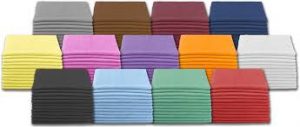
Microfiber Cleaning Wipers – How to Choose?

Microfiber is available in several different forms. The most common forms are the “Terry Style” and the “Suede Style.” The terry style is best suited for all general cleaning purposes, both domestic and industrial.

Suede works best in any “polishing” application, such as eye glasses, sun-glasses (except transitional A/R), all optics and lenses, CD’s, computer screens, TV screens, jewelry, coins, leather, and even as a replacement for a chamois to dry off your car.

Both of these styles can be used wet or dry, without soap or chemicals (chemicals CAN be used with microfiber, but usually they are not needed!)

Unlike ordinary cleaning towels that only move or push the dirt and dust from one point to another, microfiber actually “scrapes” the dirt or stain from the surface, and then stores the dirt particles in the towel, until it is washed.

Most of the time, it is best to use the suede towel dry, however, it will never harm the towel if you want to wet it. With both of these towel styles, when using wet, it is very important to always wring the towel as dry as possible. If a microfiber towel is dripping water, it is too wet and will leave streaks on the surface you are cleaning.

REMEMBER: WET IT—WRING IT—CLEAN IT!


Want to find out about healthy cleaning, click here to use the FREE Healthy Cleaning Dashboard.  How many points can you find?

Loading

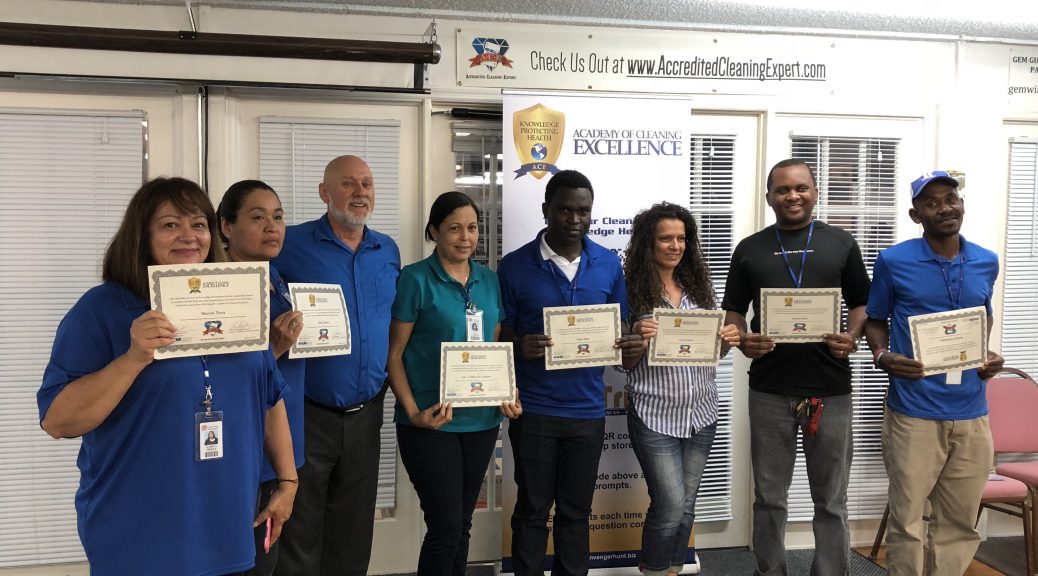
Newly Accredited Floor Care Experts

The Academy of Cleaning Excellence held another professional development class yesterday.
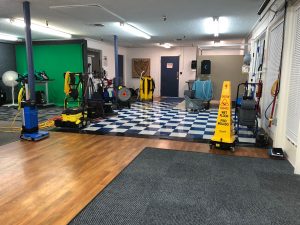
 

“How to clean, polish and refinish resilient floor surfaces.

Students reviewed with the instructor the reason we take care of

floors, and it is not for Appearance.  You’ll have to come to class to learn the real reason.  Everyone got a chance to operate tools and equipment and watch a demonstration of proper finish application.

Professional development education classes are held every week at one of the Academy’s five regional campuses.  Check out the schedule for a class near you. 

#AcademyofClng


Loading

Split Microfiber

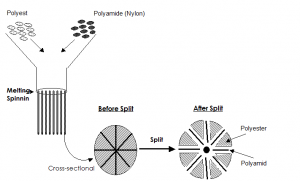
The technology was first developed commercially in Japan in the mid to late 1960’s for synthetic suede fabrics. Staple fibers were spun from two polymers, a polyester and polyamide of 0.1 denier or less.

If the microfiber is not split the cloth, pad or mop will tend not to be very effective. How many times a single strand of 1 denier microfiber is split, will make a tremendous difference in the performance of the tool.

Be advised there are 4, 8, 16 split and this will also have bearing on the initial investment as well. It is during this process the percentage blend of polyester and polyamide will show up. Always look for a processed microfiber wiper or pad to improve performance.

Looking to find out if your facility is health, click here and use our FREE Healthy Cleaning Dashboard.

Loading

Microfiber – Polyester – Really?

Now that you know a microfiber is simply a nano sized fiber, what is that nanofiber made of?
Microfiber is a man-made product combining two basic fibers, Polyester and Polyamide (a nylon by-product.)
These fibers are then “split” and formed into a blend of
  • 80% Polyester (the scrubbing and cleaning fiber), and
  • 20% Polyamide (the holding and quick drying fiber.)
In written form, this blend is expressed as “80/20.”
There are approximately 200,000 microfibers in one square inch of a microfiber towel. A single strand of microfiber is so small that it is almost invisible to the naked eye.
These ultra-small fibers give the material the ability to clean surfaces and remove dust and dirt without scratching. You can often detect a microfiber cloth because it clings to your skin as you rub it.
Consider the fact that one square yard of a microfiber cleaning towel, if torn apart and the fibers laid end-to-end, would reach from Miami, FL to Minneapolis, MN!


Click here to use the FREE Healthy Cleaning Dashboard.

Loading

Microfibers are Measured in Deniers

Denier is the unit used for measuring the fineness of fabric. Microfiber is incredibly fine with a denier of approximately 0.01 to 0.02.


Compare this against the denier of a single strand of silk at 8, or a human hair at 20!

We would also caution you to


examine the denier of the microfiber your are using, as the market is flooded with product claiming to be microfiber and the denier is OVER 1.

  • <1 denier = microfiber
  • ( 1mt/gram = 9000yards )
  • Finer than 1/100 of human hair
  • Triangular section filaments

Click Here for a FREE tool for you to use and see if your facility is healthy.  ENJOY!


Loading

Contract Cleaning Using Engineered Water

Ward Prine owns and operates a contract cleaning business in Nebraska, Corporate Caddie Janitorial Services.

Today, Ward talks with us about how engineered water has changed his operation in relation to his clients and staff.

Listen to Ward by clicking on the link below.

S1:E11  Contract Cleaning Using Engineered Water with Ward Prine


Loading

"The most valuable resource an operation has is an engaged employee, let that be YOU!"