Category Archives: Healthy Cleaning

Are You Using the Right Tools? ISSA/CMI Master Certification

If you currently use these tools, then listen to what Walt has to say.

“My message to anyone in the industry would be to go! If you care about what you do and why you’re doing it, this is not an option for you! Dave’s course is packed with so much knowledge and things to take away you get what you pay for and then some! I can’t wait to return and learn more in the future!”

Walt – Plum Borough School District/PA.

Early Registration until September 2, 2018 – a $300 discount

Who should attend?

Frontline Staff

Supervisory Staff

Management Staff 

Owners

Department Managers

Building Service Contractors

Your Schedule at the A.C.E. Academy of Cleaning Excellence:

  • Monday, 9:00 am – 5:00 pm

  • Tuesday, 8:00 am – 5:00 pm

  • Wednesday, 8:00 am – 5:00 pm

  • Thursday, 8:00 am – 12 Noon*


Register here now, for your $300 discount.

Loading

Educate – Certify – Empower – ISSA Master Certification

“Your information on Risk Management is a totally new way of thinking for me. Everything comes back to health.” Cindee – Boone, N.C.

“I wanted to develop personally during this class.  Now I know how to also help my staff develop professionally as well.” John- Kennesaw, GA.

Whether you are new to the industry or a veteran, this ISSA/CMI Masters certification class is guaranteed to give you up to date techniques and technology that you can use within your business.

Be ready to change your mindset!

 Have you found yourself in charge of a department you know nothing about?

Just moved into a position where the staff knows more than you?

Are you now inspecting work and have no idea as to the “how’s” and “why’s”?

Register here now, for your $300 discount.
Loading

ISSA/CMI Master Certification

Professional Development Education for the Cleaning Industry

Certifying All Levels of Employment

Empowering Staff to Earn Respect

Learn how to articulate the true value of your team.

You are the leader of the Risk Management team.

During this class you will be asked repeatedly,

“Why are you doing what you are doing?”

“What is the result you are after?”

Now, deconstruct how you are currently getting there and find the best practice methods, chemicals, tools and equipment to get there.

Register early for a $300 discount here.

Loading

Disinfectants and Safety

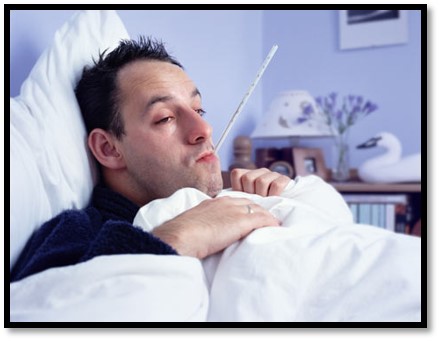
Standard precautions (SP) are safety practices you observe with every single person who uses your facility because not all the sick people are in hospitals or stay home with the “sniffles”.
For your personal protection, treat every situation as though it was potentially infectious to you or your family.
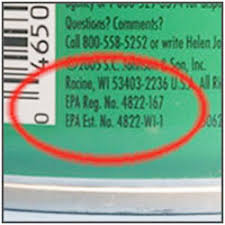
Remember: Because disinfectants are classified as pesticides by the US EPA, these products should always be used in strict accordance with product labels, as the issues at hand are life altering.

#AcademyofCleaning

Find your certification course here.  https://classes.academyofcleaning.com/p/infection-prevention
Use coupon code, BUFFER, for 50% off.

Loading

GERMS? Pathogenic Organisms?

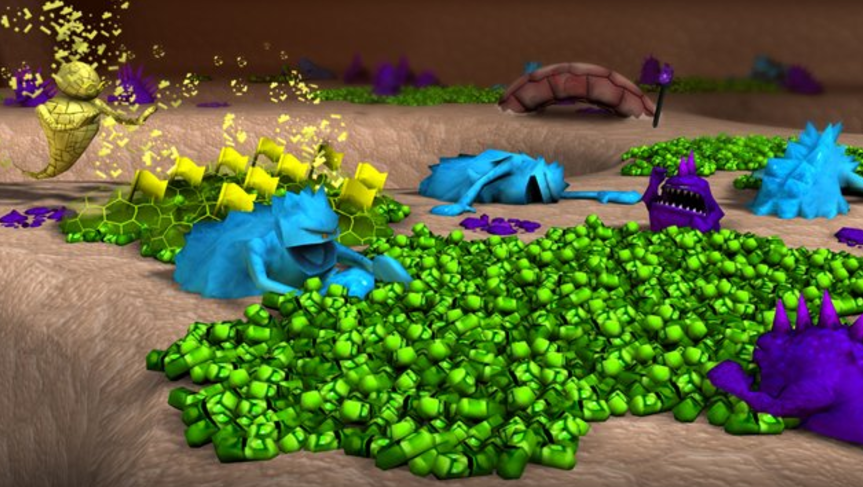
“Germs” is not a scientific term, but they are better understood as bacteria, viruses, or fungi because these are living organisms.
“Germs” is therefore a broad term we all use to refer to these microscopic organisms that can infect humans and animals.
The more proper term for these bad germs would be “pathogenic organisms.”
A virus is an infectious agent, smaller than bacteria, which requires the cells of a living organism to grow or reproduce. Viruses, need a living host to reproduce but can survive for limited periods outside a host.

#AcademyofCleaning

Find your certification course here.  https://classes.academyofcleaning.com/p/infection-prevention
Use coupon code, BUFFER, for 50% off.

Loading

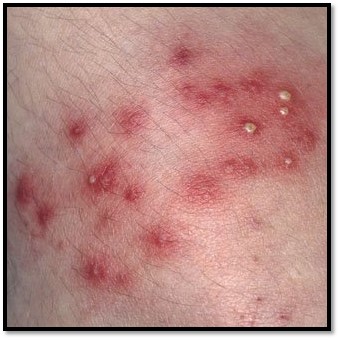
MRSA & Schools

People can carry MRSA and not have any symptoms. These “carriers” can also transmit the bacteria to other people.  School is in session this week and we all need to be vigilant in our efforts.
MRSA can be easily spread through skin-to-skin contact and by touching contaminated items. Therefore, it is crucial to take measures to help reduce the spread of MRSA using these practical steps.
• Scrub up – Wash your hands frequently with soap and warm water for at least 15 seconds – the time it takes to sing Happy Birthday twice – or use an alcohol-based hand rub sanitizer.
• Wipe it down – Use a hospital-grade disinfectant with a MRSA kill-claim to disinfect hard surfaces. Make sure to use clean cloths to avoid spreading MRSA from one surface to another.
• Cover your cuts – Keep any nicks or wounds covered with a clean, dry bandage until healed.
• Keep to yourself – Do not share personal items, like towels or razors, that encounter bare skin.

#AcademyofCleaning

Find your certification course here.  https://classes.academyofcleaning.com/p/infection-prevention
Use coupon code, BUFFER, for 50% off.

Loading

Proactive Infection Prevention

Infection prevention is a proactive process which means that administration must work in concert with the Environmental Health Services team, while keeping workers/students/occupants advised of the “Best Practices” for staying healthy.
If there is the belief a “crack team” is able to sanitize the office and completely eliminate the issue of illness within the facility, then there is a lack of understanding and a lack of shouldering responsibility by management.
Therefore, it is very important that staffs are educated in the understanding of these common diseases and infections.

#AcademyofCleaning

Find your certification course here.  https://classes.academyofcleaning.com/p/infection-prevention
Use coupon code, BUFFER, for 50% off.

Loading

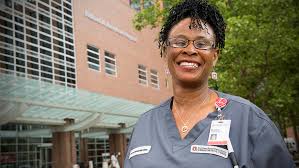
Certified Environmental Services Technician

One professionally educated, properly equipped
housekeeper or custodian
can prevent more infections
than a room full of doctors can cure!

To be proactive in the face of illnesses, the staff must know how to;

  • Recognize the symptoms, and then take steps to contain the issue.
  • Remove the potentially infected person from contact with others.
  • Once it is recognized to be an outbreak of a threatening infection, insure that proper steps are taken according to established protocol.

#AcademyofCleaning

Find your certification course here.  https://classes.academyofcleaning.com/p/infection-prevention
Use coupon code, BUFFER, for 50% off.

Loading

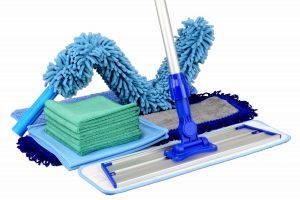
Care and Maintenance of Microfiber Cleaning Products

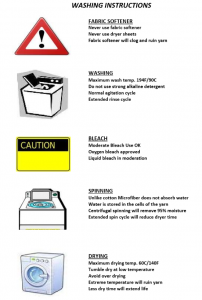
If the towel/wiper/pad becomes too dirty, it will also begin to “streak”. It is then time to wash the towel. This is easily done by just throwing the towel, or any other microfiber cleaning product, into any washing machine and laundering with any soap or detergent you prefer.

A word of caution here; experience tells me you should be careful of the additives in our detergent as they tend to build up in the microfiber, reducing its’ ability to perform as intended. The other restriction in the wash cycle is to NEVER use any type of FABRIC SOFTENER.

The towel will treat the fabric softener as if it was dirt. It will try to store the tiny particles of the softener in the towel fibers and may cause the towel to be less effective. The use of any POLISHES will result in the same issues.

Microfiber does not MOVE the dirt or dust. It actually tries to trap it, and this means a microfiber product will “fill up” periodically. This dirt and dust is released in water and soap. Soap helps release the greasy part of the build-up. If the fiber is being used with water, it must be rinsed and wrung out periodically for best performance.

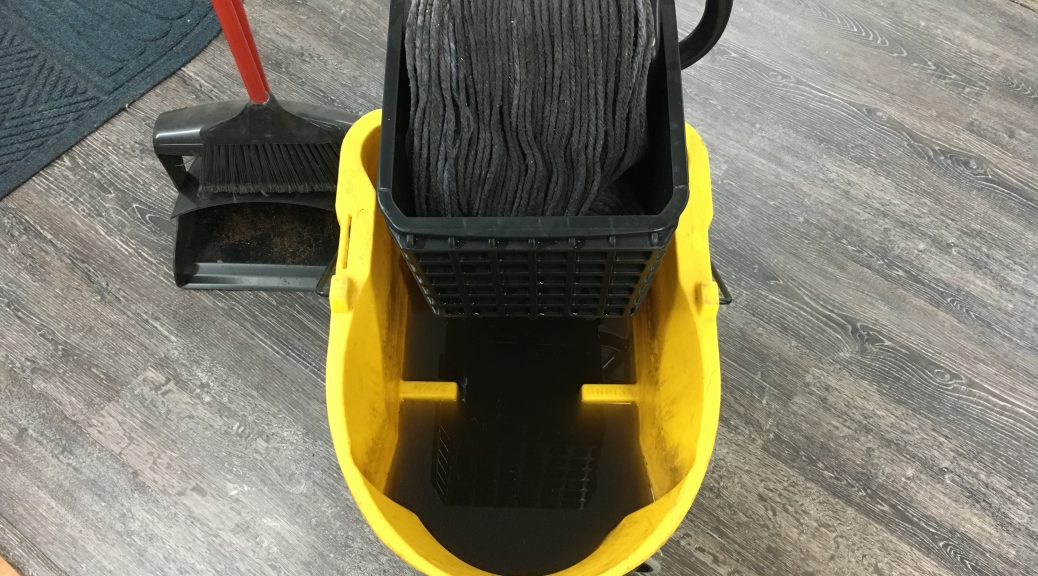
Remember, the microfiber is trying to trap and remove dirt and dust, and it should not be used to mop a whole floor or clean a whole room. The skill comes with knowing when to change out or rinse out the microfiber tool.

Click here to find points on the Healthy Cleaning Dashboard!

Loading

Microfiber – Polyester – Really?

Now that you know a microfiber is simply a nano sized fiber, what is that nanofiber made of?
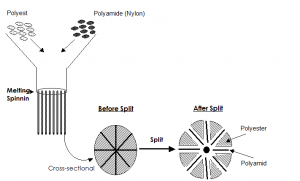
Microfiber is a man-made product combining two basic fibers, Polyester and Polyamide (a nylon by-product.)
These fibers are then “split” and formed into a blend of
  • 80% Polyester (the scrubbing and cleaning fiber), and
  • 20% Polyamide (the holding and quick drying fiber.)
In written form, this blend is expressed as “80/20.”
There are approximately 200,000 microfibers in one square inch of a microfiber towel. A single strand of microfiber is so small that it is almost invisible to the naked eye.
These ultra-small fibers give the material the ability to clean surfaces and remove dust and dirt without scratching. You can often detect a microfiber cloth because it clings to your skin as you rub it.
Consider the fact that one square yard of a microfiber cleaning towel, if torn apart and the fibers laid end-to-end, would reach from Miami, FL to Minneapolis, MN!


Click here to use the FREE Healthy Cleaning Dashboard.

Loading