Standard precautions (SP) are safety practices you observe with every single person who uses your facility because not all the sick people are in hospitals or stay home with the “sniffles”.
For your personal protection, treat every situation as though it was potentially infectious to you or your family.
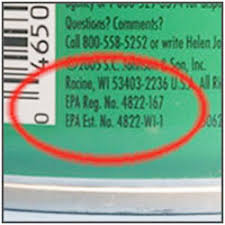
Remember: Because disinfectants are classified as pesticides by the US EPA, these products should always be used in strict accordance with product labels, as the issues at hand are life altering.
“Germs” is not a scientific term, but they are better understood as bacteria, viruses, or fungi because these are living organisms.
“Germs” is therefore a broad term we all use to refer to these microscopic organisms that can infect humans and animals.
The more proper term for these bad germs would be “pathogenic organisms.”
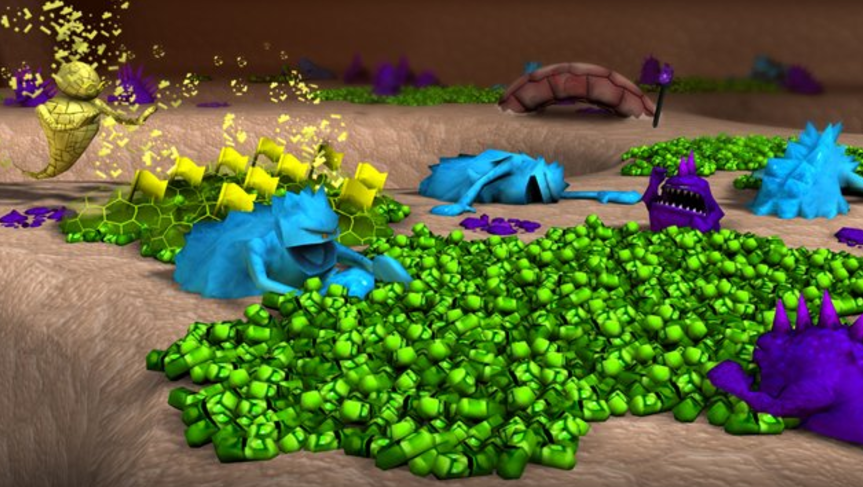
A virus is an infectious agent, smaller than bacteria, which requires the cells of a living organism to grow or reproduce. Viruses, need a living host to reproduce but can survive for limited periods outside a host.
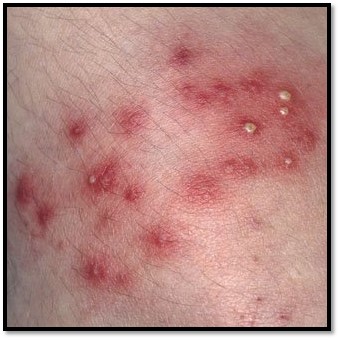
People can carry MRSA and not have any symptoms. These “carriers” can also transmit the bacteria to other people. School is in session this week and we all need to be vigilant in our efforts.
MRSA can be easily spread through skin-to-skin contact and by touching contaminated items. Therefore, it is crucial to take measures to help reduce the spread of MRSA using these practical steps.
• Scrub up – Wash your hands frequently with soap and warm water for at least 15 seconds – the time it takes to sing Happy Birthday twice – or use an alcohol-based hand rub sanitizer.
• Wipe it down – Use a hospital-grade disinfectant with a MRSA kill-claim to disinfect hard surfaces. Make sure to use clean cloths to avoid spreading MRSA from one surface to another.
• Cover your cuts – Keep any nicks or wounds covered with a clean, dry bandage until healed.
• Keep to yourself – Do not share personal items, like towels or razors, that encounter bare skin.
Infection prevention is a proactive process which means that administration must work in concert with the Environmental Health Services team, while keeping workers/students/occupants advised of the “Best Practices” for staying healthy.
If there is the belief a “crack team” is able to sanitize the office and completely eliminate the issue of illness within the facility, then there is a lack of understanding and a lack of shouldering responsibility by management.
Therefore, it is very important that staffs are educated in the understanding of these common diseases and infections.
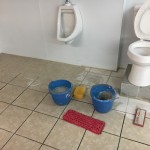
The restroom cleaning area of the Academy is finished. It has been a long process, but it has come out well. Next week, the ISSA Master Certification class will be the first to be able to utilize this new addition. We will be teaching ‘Best Practice’ methods for not only hand work, but touch free cleaning as well.
Did you know that in the last quarter of 2016, there were new laws passed regarding Baby Changing Stations, or BCS? We will be teaching the new methods for processing these stations as well.
Be sure to check our upcoming classes, as a new class is forming for
The Food and Drug Administration ruled on Friday that it is banning the use of 19 active ingredients found in antibacterial soaps and washes. The most common of these are triclosan, typically used in liquid antibacterial soaps, and triclocarban, used in bar soaps.
Manufacturers will have one year to remove the ingredients from their products, or be forced to take them off the market.
“Consumers may think antibacterial washes are more effective at preventing the spread of germs, but we have no scientific evidence that they are any better than plain soap and water,” said Janet Woodcock, director of the FDA’s Center for Drug Evaluation and Research, said in a statement. “In fact, some data suggests that antibacterial ingredients may do more harm than good over the long-term.”
As reported by the Washington Post: Theresa Michele, FDA’s director of the division of nonprescription drug products, said in a call with reporters that the “vast majority” of the more than 2,000 antibacterial products on the market contain at least one of the banned ingredients.
She said the agency had asked manufacturers for data showing that the long-term use of the ingredients was safe, as well as evidence that the antibacterial products were more effective than soap and water in curbing the spread of illnesses and infections. But she said the companies either didn’t provide the data or the material submitted wasn’t convincing.
An industry group that represents makers of cleaning products disputed that, saying manufacturers had submitted the required information. “The FDA already has in its hands data that shows the safety and effectiveness of antibacterial soaps,” the American Cleaning Institute said in a statement. “Manufacturers are continuing their work to provide even more science and research to fill data gaps identified by FDA.”
The association added that antibacterial soaps and washes “continue to be safe and effective products for millions of people every single day.”
The FDA’s final rule does not affect consumer hand sanitizers, wipes or antibacterial products used in hospitals and other healthcare settings.
With 80 percent of infections being transmitted through direct contact, it’s no wonder that proper cleaning is as vital as good personal hygiene. In addition to identifying key areas that harbor infectious bacteria, custodial managers are charged with implementing best practices for the removal of these microorganisms. This includes providing custodians with appropriate cleaning tools to mitigate the spread of germs.
Cleaning cloths are an important component of any custodial program, but often facilities settle for cheap rags in place of quality products that facilitate cleaning and disinfection.
“We’ll spend $150,000 on a UV robot housekeeper, but we’ll nickel and dime the cleaning cloths,” says Mark Heller, president of Hygiene Performance Solutions in Toronto. “So we might use a torn-up, discarded towel rather than a finished, engineered product.”
Yet, given the right tools, Heller believes custodians aspire to meet the standards set forth by housekeeping to achieve and maintain a clean, healthy environment.
Increase Your Fiber
When choosing an appropriate cloth engineered to remove soil and bacteria, there’s no substitute for microfiber, say consultants.
“Microfiber cloths are synthetic and have grooves built into the fibers themselves, so they’re very absorbent and trap soils,” explains Steve Tinker, chemist and past president of the American Reusable Textile Association (ARTA), Shawnee Mission, Kansas. “As a result, soils can be picked up very quickly and held in the fibers very efficiently.”
Although cotton is also highly absorbent, it is not as effective as microfiber at grabbing and holding onto soil.
“The pros of cotton are that it’s readily available and fairly cheap, but it doesn’t do a very good job of soil collection,” says Darrel Hicks, author of Infection Prevention for Dummies. “When it comes to infection prevention, our number-one job is to remove the soil from the surface so that the disinfectant has a better chance to work.”
Another disadvantage of cotton cloths is the problem of quat binding, which occurs when fabrics have a strong attraction for the active ingredients in quat-based disinfectants, thereby reducing their efficacy. For this reason, Hicks is seeing an increasing number of facilities switching from cotton to microfiber cloths.
University of Minnesota Medical Center — Fairview in Minneapolis, switched from cotton to microfiber cloths several years ago after testing the efficacy of both materials.
“We found microfiber will pick up the spores and microorganisms, even without the use of disinfectant, whereas cotton will just wipe them around,” says Amanda Guspiel, environmental infection preventionist. “We use quat-based disinfectants with the microfiber, and we haven’t had any issues with the quat binding that occurs with cotton.”
Guspiel has seen a reduction in the number of hospital acquired infections since switching to microfiber cloths.
– See more at: http://www.cleanlink.com/hs/article/Microfiber-Cloths-Excel-Over-Cotton–17800?utm_source=CLNewsletter&utm_medium=email&utm_campaign=CleanLink-01/21/2015?email=bzagers@gemsupply.net#sthash.9BH4SZLO.dpuf
In recent months we’ve had multiple contagious viruses arise such as Ebola and the Enterovirus D68 Virus, which was widespread throughout most schools of the US, making it extremely important to not only clean, but also disinfect the surfaces inside our buildings. The current Flu season also makes it more important to make sure your facilities are not only clean, but disinfected as well.
If you look at “Are You Really Disinfecting“, you’ll notice a couple of things. First, it is extremely difficult to truly disinfect a surface, especially in an area such as Florida. This is because of the hotter temperatures and more humidity in the air. The disinfectant will dry faster in that climate than in colder, less humid environments and to disinfect, the product must remain on a surface for the intended kill time, which on average is 10 minutes. Second, the cost of labor to have someone disinfect an entire area is very high because he/she must continually ensure the chemical is remaining on the surface.
This leads to something that has been around for a couple of years, but has been underused – the Halo Disinfection Fogger. This equipment is an extremely impressive product of innovation. It is capable of not only disinfecting a 10,000 square feet room within an hour, but it does it more effectively and efficiently than any cleaning crew by being able to get in the nooks and crannies of all surfaces without the need for supervision. This impressive device kills 99.99% of all bacteria, viruses, mold and fungi in a room. The only two requirements are that you place the machine in the room and turn it on and do not reenter the room until the machine is finished.
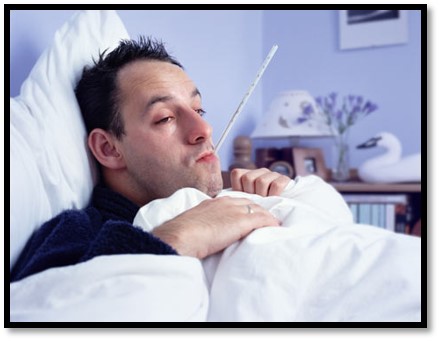
The Flu has started its devastating spree, earlier this year than in the past. In fact in the week of December 20th, nearly 7% of the deaths were blamed on pneumonia and the Flu. This percentage has been higher than last years at the same time, but this is just a small problem compared to the larger one. The bigger problem is the percentage of deaths usually rises as we move further into the Flu season, which may cause this year to have more deaths than the past few years.
Looking at past Flu seasons, the deaths have been dropping from the spike in the 2012-2013 season when 171 child deaths were blamed on the Flu. In the 2013-2014 season, this number dropped down to 109 deaths, according to the CDC. (Totals are only know for children deaths, because it is required that all child deaths have to be reported to the CDC unlike adult deaths.)
While it is too early to say if this outbreak will be worse than last years the CDC has released a map outlining Flu activity in the U.S. and Puerto Rico, which shows most states have a high activity rating.
Even if you have received the vaccination, there is no guarantee that you won’t catch the Flu this year. According to recent reports, there is a mutated strain of the Flu that wasn’t being spread during the creation of the vaccine. So help reduce the duration of the Flu by checking out these 3 steps to help prevent The Flu.
"The most valuable resource an operation has is an engaged employee, let that be YOU!"