
Category Archives: Cleaning Industry Thoughts….

Establishing Cleaning and Disinfecting Frequencies In Contracts By Skip Seal, Trainer and consultant

Sanitizing high-touch objects in non-critical care areas can be broken down into products, steps and frequency. Even though labor costs will often prohibit the dwell times required to disinfect surfaces in non-critical areas, I prefer to use the appropriate EPA-registered one-step detergent disinfectant to clean by spraying and wiping HTOs with color coded microfiber cloths.

The process cleans the surface by removing the soil and germs with the microfiber cloth so the disinfectant can continue to do its job as opposed to the non-kill properties of an all-purpose cleaner. At the very least, we are sanitizing the surface by cleaning it and providing further kill in the wet or damp cloth, preventing the transfer of germs to other areas and/or surfaces.

As a BSC, it is important that the procedures be written, be site specific and state how often and what HTOs your staff will “Clean and sanitize with an EPA registered one step disinfectant” as opposed to “Clean and disinfect with an EPA registered disinfectant.” If the latter procedure is stated, then the dwell time must be allowed for as prescribed in the product’s label instructions. Another optional procedure might be “Clean HTOs daily.”

Surfaces and cleaning frequencies should be part of the scope of work as written into new contracts. According to Dan Wagner, director of facility service programs and CIMS for ISSA, “It is crucial to remember that a scope of work needs to be clear, up-to-date and does not leave anything open to interpretation. A perfect example would be if a scope of work states that a 
contractor should ‘wipe down baseboards as 
necessary’ which is likely to mean something dramatically different to two people and can cause confusion and unmet expectations.”

Let’s say the two people Dan is referring to are you and your customer, and the contract is for a multi-use building. If the contract’s scope of work does not state (and budget for) which HTOs are cleaned, how and how often, then what is your customer’s assumption? The assumption is probably a high expectation that you have this subject covered. What if there is a MRSA outbreak amongst the occupants? Questions start flying and fingers start pointing.

The best practice is to accurately define the cleaning specifications to allow the labor required to clean and sanitize all HTOs in a building. That is feasible for new contracts. For existing contracts, be proactive and review current policies and procedures. Rewrite policies if necessary, retrain employees and document the training.
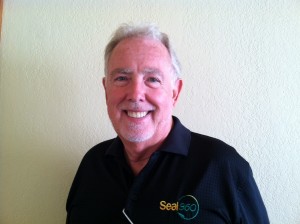
Skip Seal, CEO & Consultant,  skip@seal-360.com, or 918-607-5597. Attended San Jacinto Junior College and University of Houston. I.C.E.-GB; LEED Accredited Professional. Served his country in the US Army, and was decorated for heroism in ground combat while serving in Vietnam. As an RM, earned numerous sales awards over 22 years. Created the Training Certification Program™, which enables customization of cleaning procedure manuals for end-users. Promoted to Divisional Sales Manager and directed five divisions. Mentored numerous industry sales professionals. Created Spartan’s Certified Green Cleaning Specialist Program. Sales & Customer Service Training Distribution Logistics & Territory Management Site Specific Procedures RFP Creation/ RFQ Development Training Program Development Sustainability Programs Certification Assistance xSell360 Analysis & Recommendations
Skip Seal, CEO & Consultant,
skip@seal-360.com, or 918-607-5597.
Attended San Jacinto Junior College and University of Houston. I.C.E.-GB; LEED Accredited Professional. Served his country in the US Army, and was decorated for heroism in ground combat while serving in Vietnam.
As an RM, earned numerous sales awards over 22 years. Created the Training Certification Program™, which enables customization of cleaning procedure manuals for end-users.
Promoted to Divisional Sales Manager and directed five divisions. Mentored numerous industry sales professionals. Created Spartan’s Certified Green Cleaning Specialist Program.
Sales & Customer Service Training
Distribution Logistics & Territory Management
Site Specific Procedures
RFP Creation/ RFQ Development
Training Program Development
Sustainability Programs
Certification Assistance
xSell360 Analysis & Recommendations

Loading

Learn the Difference Between Sanitizing and Disinfecting, by Skip Seal

Learn The Difference Between Sanitizing and Disinfecting

By Skip Seal, Trainer and consultant 

To determine the appropriate cleaning procedure, we need to look at the differences among cleaning, sanitizing and disinfecting. When deciding what surfaces to clean, sanitize or disinfect, any surface or object touched by hands or skin should be considered. However, floors are not generally considered surfaces included in those involved in the transfer of germs.

Cleaning can be defined as the removal of substances and germs from objects and surfaces. Referring back to the CDC’s statement, HTOs in non-critical care areas should be cleaned daily.

Disinfecting is defined as killing germs on objects and surfaces. Disinfecting is a normal requirement in critical care areas of healthcare facilities when there is a known outbreak of communicable disease, and is part of the cleaning process when blood or other potentially infectious material is present in the facility. Dwell times for disinfectants means increased labor hours over the course of the contract.

Sanitizing lowers the number of germs on HTOs to a safe level, as judged by public health standards or requirements. In addition, sanitizers require much shorter dwell times.

Where does sanitizing fit into this discussion? Picture this: you walk into a restaurant and while you are waiting to be seated, you observe a person with weeping mouth sores drinking iced tea. That person finishes their tea, sets the glass down and departs. As luck would have it, you are served iced tea in that same glass, however you are safe from the germs that caused the mouth sores. What did the kitchen personnel do to the glass to protect you? Disinfect? No, they cleaned and sanitized the glass. Typically, a glass is allowed to air dry after being dipped into the sanitizer.

Therefore, you might draw the conclusion that cleaning and sanitizing HTOs in non-critical care areas is an acceptable, even good practice. After all, we are not eating or drinking from push plates and door handles.

However, studies show germs contaminate and survive on objects that are frequently touched by hands. For example, MRSA can survive on hard surfaces for months. These germs are efficiently picked up by hands and transferred to the mouth or to open areas on the skin. Even after hand washing, clean hands become contaminated after touching infected surfaces.

Skip Seal, CEO & Consultant,  skip@seal-360.com, or 918-607-5597. Attended San Jacinto Junior College and University of Houston. I.C.E.-GB; LEED Accredited Professional. Served his country in the US Army, and was decorated for heroism in ground combat while serving in Vietnam. As an RM, earned numerous sales awards over 22 years. Created the Training Certification Program™, which enables customization of cleaning procedure manuals for end-users. Promoted to Divisional Sales Manager and directed five divisions. Mentored numerous industry sales professionals. Created Spartan’s Certified Green Cleaning Specialist Program. Sales & Customer Service Training Distribution Logistics & Territory Management Site Specific Procedures RFP Creation/ RFQ Development Training Program Development Sustainability Programs Certification Assistance xSell360 Analysis & Recommendations
Skip Seal, CEO & Consultant,
skip@seal-360.com, or 918-607-5597.
Attended San Jacinto Junior College and University of Houston. I.C.E.-GB; LEED Accredited Professional. Served his country in the US Army, and was decorated for heroism in ground combat while serving in Vietnam.
As an RM, earned numerous sales awards over 22 years. Created the Training Certification Program™, which enables customization of cleaning procedure manuals for end-users.
Promoted to Divisional Sales Manager and directed five divisions. Mentored numerous industry sales professionals. Created Spartan’s Certified Green Cleaning Specialist Program.
Sales & Customer Service Training
Distribution Logistics & Territory Management
Site Specific Procedures
RFP Creation/ RFQ Development
Training Program Development
Sustainability Programs
Certification Assistance
xSell360 Analysis & Recommendations

Loading

Disinfecting for Health by Skip Seal

The questions have been asked: Do we need to disinfect? Is it possible to over-disinfect? Do we disinfect, then clean?

According to the Centers for Disease Control and Prevention (CDC), when cleaning non-critical patient areas (including common areas in office buildings and schools), high-touch objects (HTOs) should be cleaned daily using an all-purpose cleaner. These surfaces should be cleaned with a one-step detergent disinfectant cleaner if they have been in contact with known or suspected persons with contagious disease. Think of a one-step disinfectant as an all-purpose cleaner that is also a disinfectant.

When disinfecting is required, and a one-step detergent disinfectant is not used, cleaning must be performed before applying the disinfectant, otherwise the soil remains as a barrier between the germs and the disinfectant. Disinfectants, even one-step disinfectants, should not be used as general cleaners; instead consider disinfecting for health.

One-step detergent disinfectants can be both excellent cleaners and effective disinfectants. These products can be diluted through a suitable dispenser providing great economy. All disinfectants require contact or dwell times to meet stated kill claims. A one-step detergent disinfectant may be an excellent cleaner but to disinfect for health, it may require the surface to remain wet for up to 10 minutes.

End of story?

Not quite. These answers do not address the everyday world of most building service contractors. There are several factors to consider when making the decision whether to use a disinfectant or not. What areas are included in the scope of work? Are they critical care areas in a healthcare environment or public HTOs in office buildings, schools, etc.? In non-healthcare buildings, is there a known outbreak of communicable disease? What are the customer’s expectations compared to the contract’s specifications?

Skip Seal, CEO & Consultant,  skip@seal-360.com, or 918-607-5597. Attended San Jacinto Junior College and University of Houston. I.C.E.-GB; LEED Accredited Professional. Served his country in the US Army, and was decorated for heroism in ground combat while serving in Vietnam. As an RM, earned numerous sales awards over 22 years. Created the Training Certification Program™, which enables customization of cleaning procedure manuals for end-users. Promoted to Divisional Sales Manager and directed five divisions. Mentored numerous industry sales professionals. Created Spartan’s Certified Green Cleaning Specialist Program. Sales & Customer Service Training Distribution Logistics & Territory Management Site Specific Procedures RFP Creation/ RFQ Development Training Program Development Sustainability Programs Certification Assistance xSell360 Analysis & Recommendations
Skip Seal, CEO & Consultant,
skip@seal-360.com, or 918-607-5597.
Attended San Jacinto Junior College and University of Houston. I.C.E.-GB; LEED Accredited Professional. Served his country in the US Army, and was decorated for heroism in ground combat while serving in Vietnam.
As an RM, earned numerous sales awards over 22 years. Created the Training Certification Program™, which enables customization of cleaning procedure manuals for end-users.
Promoted to Divisional Sales Manager and directed five divisions. Mentored numerous industry sales professionals. Created Spartan’s Certified Green Cleaning Specialist Program.
Sales & Customer Service Training
Distribution Logistics & Territory Management
Site Specific Procedures
RFP Creation/ RFQ Development
Training Program Development
Sustainability Programs
Certification Assistance
xSell360 Analysis & Recommendations


Loading

Six Facility Spring Cleaning Tips You Can Use

Six Facility Spring Cleaning Tips You Can Use

Springtime means storm season for most areas of the country. Spring storms can create facility challenges, such as entry-way cleanliness and safety issues, water damage, and more. To help you with these seasonal weather-related facility challenges, we’ve developed a few tips for facility managers and cleaning contractors to help ensure that your facility is clean and safe for building occupants.

1. Freshen up facility appearance: To maintain the building and to improve the appearance of your facility overall, take time to address small maintenance issues such as changing light bulbs, touching-up paint, and replacing entry-way matting.

2. Entryway Safety: Springtime brings storms and wet weather conditions which can create safety hazards for building occupants. Be sure to invest in new matting systems or clean existing matting at all building entrances and exits. Spring is also a good time to perform floor care equipment maintenance, or if appropriate, invest in new floor care equipment that will address spring cleaning challenges. For example, wet-dry vacuums or air-movers are important to keep entryways safe and dry. Additionally, make sure your facility has enough “caution wet-floor” signs to use at entrances and exits during rain and storms to minimize slips and falls.

3. Focus on flooring: Winter weather can really take a toll on your facility’s floors. Restore your hard floors and grouted tile in the spring by cleaning them with cylindrical brush floor scrubbers. When it comes to restoring carpeting, deep-clean carpets with moisture-controlled carpet extractors to bring the fabric back to its original beauty. This deep-cleaning process also helps to extend the longevity of your facility’s flooring assets, and can delay expensive replacement costs.

4. Deep-Clean Restrooms: The Spring is the perfect time to consider implementing a no-touch deep cleaning system for restrooms that effectively removes built-up soils by sanitizing all restroom surfaces and fixtures.

5. Maintain and Clean air conditioning units: To lower your energy bills and ensure the best indoor air quality (IAQ) for building occupants, facility managers should complete a comprehensive A/C coil cleaning service. Completing regular A/C coil cleaning removes dirt, grime and built-up sludge from A/C units which can improve IAQ, lower energy bills and extend the life of air conditioning units.

6. Begin Using Environmentally-friendly Products and Cleaning Practices: According to a recent Harris Interactive survey, 84% of U.S. adults prefer to do business with a company that uses environmentally-friendly products and practices. Be sure to select products that meet the requirements of the EPA’s Designed for the Environment Program (DfE) for safer chemistry, or Green Seal certified products. What’s more, businesses can implement green cleaning methods such as the use of low-moisture dilution control chemical dispensers on hard-floor automatic-scrubbers, moisture- controlled carpet extractors that reduce moisture and improve carpet drying-times, and switch to reusable mops or surface wipes to limit environmental impact.

Tips provided by CFR Corp.

Loading

Training Facility Employees To Clean Restrooms, by Brendan O’Brien

Training Facility Employees To Clean Restrooms

By Brendan O’Brien 

Once an employee is hired, he needs to be put through a thorough training program. The program should walk the employee through the steps of cleaning the restroom, much like he is taught to do his other duties such as flipping burgers in a restaurant or handling ticket sales in a movie theater.

The training program should be multi-lingual so that those that speak different languages can learn the process in their native language. If the training program is through a distributor, consultant or cleaning supply manufacturer, managers should be able to access the training materials such as videos and written materials, easily.

Using materials that can be easily accessed by the manager will create consistency on how to clean the restrooms throughout the enterprise, says Traudt.

“They need to have a documented program that takes them step-by-step on how they are going to clean the bathroom,” he adds.

When developing a training and cleaning program, managers should not take anything for granted, given that some of their young employees may have never cleaned a restroom before in their life, says Marianne Abiaad, the executive vice president at Royal Corporation, Santa Fe Springs, Calif.

“One of the main challenges is training a younger staff, whom are not accustomed to handling these tasks consistently even in their own homes,” Abiaad says. “It’s crucial not to assume anything and to start from the beginning.”

Training should not be done by managers or co-workers, but by an outside expert who can bring knowledge and objectivity to the task of properly cleaning restrooms, says Brian Waddell, director of education at Bruco, Inc., Billings, Mont.

Using an outsider to teach employees to clean restrooms also alleviates the chance of passing on bad habits, says Waddell.

Thank you CleanLink.com!


Loading

ISSA TV, Put the Pro in Professionalism

Put the Pro in Professionalism With Anthony Trombetta

Do you know how many steps someone will take to reach a garbage can? The cleaning professionals at Disney know, and they use this kind of knowledge to makes themselves a valuable part of the branding strategy. In this week’s ISSA TV, Educational Quick Clip, Anthony Trombetta explains how you can use better training—and top-notch professionalism—to make cleaning a walk in the park, just like Disney…..Watch it Here

Loading

Chemical Dispensers Reduce Waste and Save Time, CleanLink.com

Chemical Dispensers Reduce Waste and Save Time

By Kassandra Kania 

One of the biggest cost savings of chemical proportioners is the reduction in chemical and water waste related to manual mixing methods.

“Back in the day, people believed more is better,” says Rod Taylor, sales team leader for KSS Enterprises, Kalamazoo, Mich. “If it said two ounces a gallon, then you swore to six ounces a gallon.”

Distributors also find that some customers who use the “glug-glug”method believe that cleaning products need to be a certain color in order to work properly.

“If you have a glass cleaner, for example, some people think it needs to be a really intense blue,” says Smith. “So they just keep pouring in concentrate until they get the ‘right’ color blue.”

With chemical proportioning systems, concentrated chemicals are accurately diluted to preset ratios, thereby eliminating the overuse of chemicals and/or water.  Preportioned packets can also help minimize chemical waste by controlling the amount of chemical allotted to janitorial staff for each shift.

“When you use prepackaged chemicals you have guaranteed portion control,” says Banks. “You can calculate how many quarts an individual uses during their shift and allot them only the amount needed to do their job for that shift. By doing that you’re really pegging the cost.”

But preportioned chemical packets, like gallon jugs, can be misused.

“If they’re used properly and you have proper supervision of the people using them, packets are very effective,” says Smith. “However, it can be a problem if you’re supposed to put one packet in a bucket and you put in two or three. You have to have a good process in place to issue the packets and monitor their usage.”

In addition to rising costs due to chemical waste, customers need to consider the potential for increased labor costs as a result of improper mixing.

“[With manual mixing methods] people have a tendency to use more chemical, which can leave a sticky residue on the surface, leading them to redo work,” says Fishman. “Using chemical proportioning systems can help prevent this problem.”

Improperly mixed cleaning solutions can cause more harm than just a sticky surface.

“With a chemical proportioning system, you’re ensuring the chemical is being used correctly, so you’re not going to damage the surface you’re trying to clean by using too much chemical,” says Smith. “If you’ve got floor finish on a floor, for example, and you use a chemical that’s too strong it could damage the finish, which could lead to the need for another process to repair the damage.”

Similarly, and just as problematic, cleaning products that are too weak may not do a proper job of cleaning or disinfecting.

Chemicals are not the only things being wasted with a “glug-glug” method. Switching to dilution control systems can help end users also save time — and, of course, in the cleaning business, time is money.

“According to ISSA standards, every time you stop the job and go back to the cabinet to refill chemicals you lose 20 minutes,” says Banks.

With a chemical dispenser, janitors no longer have to spend time manually mixing product.

“If I’m using a proportioning system, it’s a quicker, simpler process,” says Taylor. “You just push a button instead of having to measure out the product and mix it up.”

Kassandra Kania is a freelance writer based in Charlotte, N.C.  She is a frequent contributor to Sanitary Maintenance.  Read more at CleanLink


Loading

Tips to Keep Your VCT Flooring Looking Great, from CleanLink

Tips to Keep VCT Flooring Looking Great

Vinyl composition tile (VCT) is one of the most common types of hard surface floorings cleaning professionals will encounter.  It is durable, relatively easy to clean, and inexpensive when compared to most other floor types. However, when working with a new VCT floor, maximizing the floor’s benefits will depend on how well it is cared for from the very start.

To help, Powr-Flite focuses on techniques to keep VCT floors looking their best from the start, helping to save time, energy, costs, and protect the environment all at the same time.

“The first thing to do [with a new VCT floor] is nothing,” says Mike Englund, a cleaning trainer and product manager for Powr-Flite. “Wait a week to allow the adhesives used to secure the floor ample time to thoroughly dry and harden.”

He then recommends the following:
Scrub: Machine scrub the floor to remove soils and any protective coatings the manufacturer may have applied.

Chemical selection: Consider selecting chemicals from the same manufacturer; often, cleaners, strippers, sealants, and finishes from the same manufacturer are designed to work together as a system.

Seal and finish: VCT floors should be sealed and/or finished to protect the floor.  The number of coats depends on such factors as the customer’s expectations, traffic conditions, budget, climate, etc.

Burnish or buff: Decide whether the floor should be burnished or buffed; this will help determine the type of finish required.

“The automatic scrubber selected to maintain VCT is critical,” says Englund.  “It’s not only a matter of maintaining a quality appearance, but the right machine can help keep costs down and worker morale and productivity up.”

Additionally, the size of the floor area to be maintained is another variable to consider.

“[For instance], a six-foot wide aisle can typically be cleaned effectively with a 20-inch machine.  While you might think a larger machine will get the job done quicker, it may only offer a moderate gain in productivity and unless it is used for other purposes, may not be worth the added cost,” he adds.

Click Here to check out all Power-Flite has to offer!


Loading

FREE Webcast on Breaking the Chain of Infection, by CleanLink


FREE Webcast brought to you by  Cleanlink
Sponsored by Spartan Chemical

INFECTION CONTROL:
Breaking the Chain of Infection

Wednesday | August 14 | 1PM ET

Register Today!

In any workplace’s war against infection, the enemy is aggressive, and ever-changing. As viruses like C. diff, MRSA and VRE become more resistant, the proper cleaning tools and procedures are vitally important to eradicating outbreaks. Equally important is educating employees on their need to follow specific cleaning protocols to break the chain of infection. If not, germs spread, bacteria mutate, and building occupants contribute to the problem with poor hygiene habits. The need to develop a battle plan – and recruit customers, end users and occupants to join the fight – is stronger than ever.

This webcast provides an in-depth understanding of universal practices and methods for combating the spread of infection in a variety of settings. The result: a healthier working environment for building occupants, increased morale, reduced absenteeism and greater productivity. The Webcast details:

  • Considerations specific to various types of facilities: schools, health care, hospitality, offices, etc.
  • Why these facilities are breeding grounds for infections
  • Ways to reduce MRSA, influenza and the common cold
  • Cleaning and disinfecting common touch-points, such as door knobs, keyboards, light switches, hand rails, etc.
  • Promoting and practicing proper hand washing
PRESENTED BY
Hicks Darrel Hicks
Author & Consultant
MODERATED BY
Zudonyi Corinne Zudonyi
Editor
Facility Cleaning Decisionsmagazine
Cleanlink.com

Breaking the Chain of Infection


Loading

“Blowing Smoke” Can Be Life Threatening, by Fred Broder

  Despite living in homeless shelters or in a car, with her mother and siblings for the past four years, Chelsea Fearce, graduated, this month, from Charles Drew High School, in Georgia, as Valedictorian of her class.
 
 She often studied at night by the light provided from a cell phone. Chelsea refused to allow her circumstances to serve as an excuse, alibi or justification for being anything but the best.
 
For every Chelsea that refuses to be denied, dissuaded or deterred from pursuing and achieving his/her dreams, there seems to be a ten fold number of people who prefer to “blow smoke”.
 That is a politically correct phrase to describe the self talk and interactive talk they engage in to rationalize their laziness, procrastination,  inaction and underperformance.
 
It’s a fact, some people are born with the proverbial ” silver spoon” and others are born into unbelievably difficult situations.
 
Your starting point is not based on “fairness”.
It’s what you do with the cards you are dealt that is the true measure of you as a person.
 
Do you have an “I will” attitude or are you busy “blowing smoke”?
 
Helen Keller overcame being blind and deaf to become an educated, inspirational proponent of women’s rights.
 
Winston Churchill overcame a stuttering problem and poor school perfomance to become one of the most significant political figures in history.
 
Wilma Rudolph, the 20th of 22 children overcame polio, scarlet fever and double pneumonia to win three Gold Medals, in track, in the 1960 Rome Olympics.
 
 J.K. Rowling, born poor and a single mother living on govenment assistance, was turned down by most publishers when she wrote her first Harry Potter book.
 
  How Well Do You Handle Adversity In Your Life?
 
 Here Are A Few Tips:
 
  • Be aware of, and accept that, in life, adversity is inevitable
  • Prepare yourself mentally and physically to aggressively respond to adversity
  • Create a support system of family and friends
  • Take comfort and learn from others who have faced similar adversity
  • Control your emotions and analyze your adversity and options as objectively as possible
  • Create and have a plan, timeline, tactics and resources to address your challenge
  • Focus and implement your plan with confidence
  • Be realistic, there is no guarantee that you will overcome the adversity 
  • If unsuccessful, regroup. Review your options, in light of your new reality
  • Move Forward, Move Forward!!!- You Are Resilient!!!!!!
 Remember
“Adversity has the effect of drawing out strengths and qualities of a man that would have lain dormant in its absence.”
Herodotus
“You may not realize it when it happens, but a kick in the teeth may be the best thing in the world for you. “ Walt Disney
” The gem cannot be polished without friction, nor man perfected without trials.”                 Dutch Proverb                     

You know that smoke, both direct and secondary, is detrimental to your health.
What you may not know is that ” Blowing Smoke”- (“BS”) is also quite dangerous and life threatening.
The excuses, lies, projections, the “victim mentality” that too many unhappy, unsuccessful people employ, in both their personal and professional lives, is basically,”BS”.
 “Blowing Smoke” may be indicative of immaturity and an unwillingness to be accountable.
Adults possess self confidence, commitment passion.
Adults have the will to fight, rebound, get bloodied, and confront adversity.
Dr. Broder, Your Attitudinal “Surgeon General” says:
Stop Blowing Smoke and Stop Inhaling the Secondary “Smoke ” of others!
 It may Adversly affect your attitude, your behavior, your life!
In addition to preparing several, speaking, sales and managment programs, I will be the guest speaker, for the 5th time, for the passengers of the Queen Mary 2 Cruise Ship the first week of July.
 I am booking programs for 2013 and 2014. Please contact me if you or someone you know might want to discuss my serving as a resource. As always, I welcome and encourage your feedback.
Until Next Time,
Fred Broder,
fred@fredbroder.com
www.fredbroder.com


Loading
