

E39 BCWD * Dealing with Language Barriers with Angel Cruz
E38 BCWD * You Don’t Understand Me with Don Tracy
E37 BCWD * Recognizing Value with Dan Wagner
E36 BCWD * Dealing with Workplace Issues with Raul Santiago
E35 BCWD * Custodial Pride with Michael Ward
E34 BCWD * Choosing the Right Floor Finish with John Norwat
Part Two -The Power of Water
The Power of Water
As professionals in the cleaning industry, we use water in many cleaning processes and many individuals may not realize that there are ways we can alter water to clean better.
- Surfactant
- pH
- Oxidization
- Pressure
Surfactant
The concept of “Making Water Wetter” has been an age-old idea. While not trying to be too complicated, water has a property called “Surface Tension”. Surface tension may slow down the cleaning process because the water does not wet the surface, but remains on the surface. This is why water will bead up on a smooth surface. Surfactants reduce the water tension.
Surfactants are generally soaps. Surfactants perform other important functions in cleaning, such as loosening, emulsifying (dispersing in water) and holding soil in suspension until it can be rinsed away.
pH
The power of Hydrogen (pH) refers the level of acidity or alkalinity of a solution. pH uses a scale of 0 to 14 to measure the pH. Water is ‘neutral’ at a 7 ph on the scale. Below 7, the solution is more of an acid. Above 7, the solution is considered an alkaline.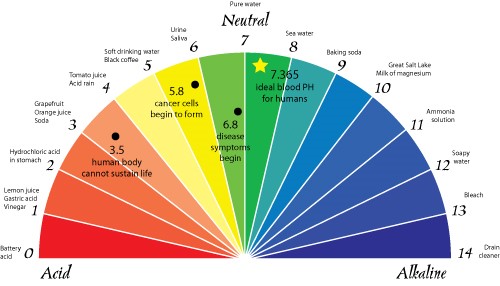
Strong acids and alkaline are more likely to emit volatile organic compounds (VOCs), which are yet another concern for those in the cleaning services. Cleaning experts have long argued, that prolonged exposure to VOCs is a known health hazard.
pH will always be a factor in cleaning, and like many things in life, the most concerning are the extremes that may be adopted in the cleaning program. All product labels have the pH levels identified as part of the safe handling of cleaning products.
OXIDIZATION
Oxidizing Reduction Potential (ORP) refers to the Oxidation Potential in which water may be altered, or improved for cleaning and sanitizing purposes.
ORP refers to the power of a liquid to oxide (destroy) potential contamination. As you can see in the chart, ORP is currently an important measurement for numerous water applications.
Oxygen can turn iron to rust, turn copper green, or cause wood to age. This happens every day in nature, but begs the question, “What happens if we can flood the target area with billions of oxygen atoms?” Oxidizers are powerful sanitizers because they quickly attach to the outer membrane of bacteria and virus, causing the protective skin to fall apart.
Pressure
This is yet another way to make water, work better. When applied in a pressurized stream, water can strip and remove many surface contaminants. Using engineered water in a pressurized stream, such as in no touch cleaning systems, carpet extraction units and many more, the water and oxygen together are an unbeatable duo.
Everyone should know a great deal about water temperature, cleaning products, and water pressure. What we may not know much about is the application of engineered water to the cleaning and sanitizing process.
Continue on to Part Three – On-Site Generation of Engineered Water
Academy Restroom Cleaning Training
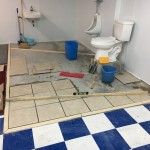
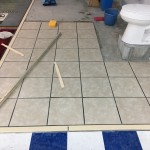
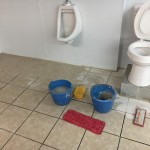
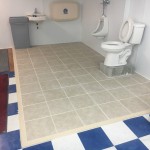
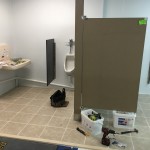
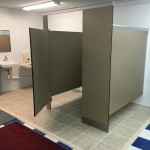
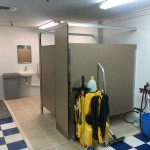
The restroom cleaning area of the Academy is finished. It has been a long process, but it has come out well. Next week, the ISSA Master Certification class will be the first to be able to utilize this new addition. We will be teaching ‘Best Practice’ methods for not only hand work, but touch free cleaning as well.
Did you know that in the last quarter of 2016, there were new laws passed regarding Baby Changing Stations, or BCS? We will be teaching the new methods for processing these stations as well.
Be sure to check our upcoming classes, as a new class is forming for
“Restroom -Tile – Grout Cleaning”. Check here for this class coming soon.
Check out this video of “How to Clean a Restroom”
Engineered Water – Part One
Engineered Water in Cleaning – Part One
Water is unquestionably the “Universal Solvent” and as such, every Technician should appreciate that water is essential to any cleaning process where a liquid is involved. This understanding allows the cleaning team to solve cleaning problems in the most effective, and most environmentally-safe, manner.
Engineered Water (EW) – “Water engineered to meet the performance requirements of professional cleaning, sanitizing and/or disinfecting, with long-term value and green factors as the key uptake and ethical drivers, and On Site Generation (OSG) as a common denominator,” as defined by the Engineered Water Consortium.
Water
Water, what is it? Why isn’t water on the periodic table of elements? The periodic table only includes individual chemical elements. Water is not found on the periodic table because it does not consist of a single element.
Water is a molecule of bonded hydrogen and oxygen atoms. The smallest particle of 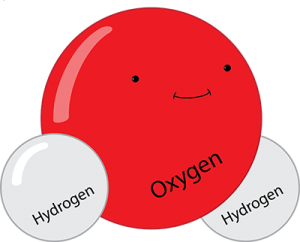 water is a water molecule, which is made of two atoms of hydrogen bonded to one atom of oxygen. Its formula is H2O and it can be broken down into its components, so it is not an element. Water is made of 3 atoms. Two are hydrogen, and one is oxygen.
Complicated? Not really, as changes to water can improve its cleaning power and ability. Water is the foundation of cleaning in nearly every cleaning product.
This subject is complicated and thus is why it is important that you understand the complexities of the base liquid product you are using in your liquid cleaning programs.
Learn more on this subject in Part 2 – The Power of Water