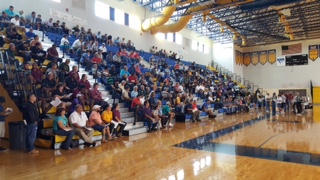
This is key to being successful at any level of custodial work. Mike Ward has found that most custodians don’t respond to data, but they do respond to great communication. An easy way to annoy the custodial crew is by not telling them about an event and the next thing you know there are 500 people in the building while they are trying to clean.
What we can do to help this situation is to have a great working relationship with the office staff, athletic director and parent groups. This is key to maintaining great communication. It is also usually the gap in why communication is not working within the custodial ranks. It is equally important to have great communication amongst your custodial crew. #AcademyofClng
The Food and Drug Administration ruled on Friday that it is banning the use of 19 active ingredients found in antibacterial soaps and washes. The most common of these are triclosan, typically used in liquid antibacterial soaps, and triclocarban, used in bar soaps.
Manufacturers will have one year to remove the ingredients from their products, or be forced to take them off the market.
“Consumers may think antibacterial washes are more effective at preventing the spread of germs, but we have no scientific evidence that they are any better than plain soap and water,” said Janet Woodcock, director of the FDA’s Center for Drug Evaluation and Research, said in a statement. “In fact, some data suggests that antibacterial ingredients may do more harm than good over the long-term.”
As reported by the Washington Post: Theresa Michele, FDA’s director of the division of nonprescription drug products, said in a call with reporters that the “vast majority” of the more than 2,000 antibacterial products on the market contain at least one of the banned ingredients.
She said the agency had asked manufacturers for data showing that the long-term use of the ingredients was safe, as well as evidence that the antibacterial products were more effective than soap and water in curbing the spread of illnesses and infections. But she said the companies either didn’t provide the data or the material submitted wasn’t convincing.
An industry group that represents makers of cleaning products disputed that, saying manufacturers had submitted the required information. “The FDA already has in its hands data that shows the safety and effectiveness of antibacterial soaps,” the American Cleaning Institute said in a statement. “Manufacturers are continuing their work to provide even more science and research to fill data gaps identified by FDA.”
The association added that antibacterial soaps and washes “continue to be safe and effective products for millions of people every single day.”
The FDA’s final rule does not affect consumer hand sanitizers, wipes or antibacterial products used in hospitals and other healthcare settings.
Most prevalent in the winter months, norovirus is the most common cause of acute gastroenteritis outbreaks in the United States resulting in as many as 21 million cases each year and 1.9 million hospital visits. To help reduce the spread of flu within businesses this season, Cintas Corporationoffers a checklist of commonly overlooked “hot spots” to help facility managers maintain a clean environment for employees and guests.
“A norovirus outbreak can wreak havoc on a business’s productivity,” said John Engel, Senior Marketing Manager, Cintas. “Whether you work in a school, medical building, hotel, restaurant or even a cruise ship, an aggressive cleaning regimen with effective cleaning, sanitization and disinfection can help reduce the impact or threat of an outbreak.”
The Centers for Disease Control and Prevention (CDC) identifies three primary modes of transmission for norovirus: eating or drinking contaminated foods or liquids, touching surfaces or objects contaminated with norovirus then putting your fingers in your mouth or having direct contact with an infected person.
To help minimize the spread of norovirus, facility managers should pay close attention to the following items within a building:
• Door handles. Because they are one of the most touched surfaces in a facility, it’s important to regularly wipe down and disinfect all door handles within a building. This includes doors to offices, restrooms, storage areas, refrigerators, as well as the front and back entrances that are often used by employees.
• Community tables. Whether it is in a conference room, waiting area or in an employee cafeteria, table surfaces are touched often and should be regularly cleaned and disinfected.
• Elevators. Touched daily by employees or guests, elevator buttons can be a likely source for virus transmission. Wipe down elevator buttons on a daily basis and sanitize them at least once a week.
• Community benches and chairs. Because they are designated for sitting, seats might be an overlooked part of the cleaning and disinfecting process. To prevent the spread of bacteria and norovirus infection, clean all parts of the seat, including the bottom and arm rests.
• Light switches. Although light switches in primary areas of a facility, such as the lobby, might be touched only once a day, light switches in other areas like meeting rooms, offices or the restroom are used more frequently and require additional cleaning.
• Employee kitchen equipment. Clean and wipe down the surfaces of all kitchen and break room equipment, including large items such as dishwashers and microwaves and smaller equipment such as coffee makers and toasters.
• Drinking fountains. Drinking fountains can become contaminated by a variety of germs from the user’s mouth and hands, which is why it’s important to disinfect their surfaces – particularly their spouts and handles daily.
• Railings. Located alongside stairs or at the top of an atrium or overlook, railings and handrails should be cleaned and disinfected daily.
The Centers for Disease Control and Prevention (CDC) has recently announced the rise of a dangerous superbug, which scientists are calling the “phantom menace.” The strains of this bug stem from a family of antibiotic-resistant bacteria known as carbapenem-resistant Enterobacteriaceae (CRE).
Because of their resistance to antibiotics, infections can be very difficult to treat and the spread can be challenging to defend against. According to reports, infections can lead to death in up to 50 percent of patients. These statistics forced the CDC to release a statement about the CRE threat back in 2013, when the infection first began spreading. But, reports indicate that the spread has only increased among hospital patients.
Over the years, there has been a lot of focus on the common types of CRE threatening the public, but this new “phantom menace” has proven to be more challenging than others. Scientists have found that it is actually less antibiotic-resistant than other common types of CRE, but because it hasn’t been the center of tests by health officials, the true threats are still unknown.
What we do know is that CRE carries a plasmid, or mobile piece of DNA, with an enzyme that breaks down antibiotics. This bacteria is dangerous because of its ability to transfer that plasmid — and its corresponding antibiotic resistance — to normal bacteria present in our bodies. According to reports, there were 43 reported cases of CRE in the U.S. between June and August 2015, all with the potential to transfer their antibiotic invulnerability to other types of bacteria.
Researchers have found that this mutation is already threatening patients. Reports indicate that a new superbug gene discovered in China has been found in a person in Denmark. The gene makes the bacteria resistant to even what doctors consider the “last resort” antibiotic — treatment used when bacteria have shown resistance to everything else.
Most U.S. clinical laboratories that test for CRE organisms wouldn’t identify this particular type of bacteria because it’s not part of standard testing, but they warn that these mobile resistance genes can spread around the world quickly, silently riding in people, animals and food. Consequently, the CDC has recently changed its definition of the organism to help increase detection.
Officials agree that it is essential to fight these bacteria before a large-scale outbreak occurs. The best line of defense is to improve hand hygiene programs and encourage everyone who enters the hospital room to wash their hands.
Reports say that there is little chance that an effective drug to kill CRE bacteria will be produced in the coming years. Manufacturers have no new antibiotics in development that show promise, according to federal officials and industry experts, and there’s little financial incentive because the bacteria adapt quickly to resist new drugs.
by Sean Martschinke, Marketing Manager, Tornado Industries
It’s December and that means the holiday season is nearly here. Many BSCs say sales during the period between Thanksgiving and New Year’s Day become sluggish or, for some, completely stalled. The phones stop ringing, employees go on vacation, and the office gets eerily silent.
Although the winter slump may be a normal part of the sales cycle, there’s no reason to let it defeat your business. Take advantage of the next two months by getting organized and putting systems in place that will put you ahead of the pack when customers are ready to buy again. Here are five strategies to help your business stay afloat—and even grow—during a seasonal slowdown.
1. Prepare for the worst.
Every BSC should have a cash reserve to cover at least two months of expenses. Setting aside a small percent of each month’s revenue creates a stash of cash that can be used during an emergency, such as a slow season. If you already have a reserve, nice job! (You can skip to #2.) If you don’t, however, this is the time to start building it.
It may sound counterintuitive to save during a sales slump, but it’s never easier to pare down than when circumstances force it.
Review your expenses and identify areas that can be cut. Divert those savings, no matter how small, into your emergency fund ($50 here and there will quickly add up). Or, simply pause certain expenses with a commitment to resume them when sales increase. This is also a good time to visit with suppliers and ask for more favorable terms. Even a small readjustment in payment due date can create more time to build a cash reserve. Once the slow season ends, don’t stop setting aside money until you’ve reached at least two months of expenses.
2. Perform an audit.
Use this time to review your processes and look for ways to improve efficiency and decrease waste. Research new technology solutions that can streamline or automate systems (ask peers or industry associations for recommendations). Review your employees’ tasks and eliminate redundancies. Create a central repository for shared resources. Make sure the whole team is current on training and that everyone understands the company mission, goals, and messaging.
3. Do a marketing check-up.
Speaking of messaging, set aside some time to analyze your current marketing process. Start with the big picture—refresh your marketing plan to reflect any changes in your goals and to include newer tactics, like social media.
Next, review printed marketing materials (brochures, business cards, signage, etc.), and refresh anything that has old information or is unattractive. If you can’t afford the changes right now, make a checklist of what you’ll update when cash starts flowing again.
Finally, spend a few hours on your company’s website. You may be surprised by how quickly information can become outdated. Make sure service and product descriptions, pricing, staff directories, and contact information are current. Delete out-of-date content such as news releases about old promotions or white papers on obsolete technologies. Write a handful of new evergreen blog posts from which you can pull when you’re too busy to write next year. These upgrades are time consuming, but shouldn’t require much or any money.
4. Make a plan.
Which services or products over performed this year? Which market segments are showing signs of growth? Does anecdotal or statistical evidence suggest it’s time to add a new service, carry a new line, or market to a new type of client? Brainstorm ways to build upon this year’s strengths and shore up weaknesses. Create an action plan for each item and set deadlines.
Use the rare quiet time during the holidays to look at how your company performed this year and what you can do to make next year bigger and better.
Also, remind current customers and prospects to include you in their plans for next year. Have your sales team reach out to everyone on their lists and set up meetings in the coming months to discuss how your products and services can fit into their upcoming budgets. Consider a discount for those who sign on the dotted line before year’s end to encourage them to act fast.
5. Drive sales.
Yes, sales are slow. No, it’s not okay to roll over and play dead. Proactive and cost-effective sales pitches to current customers and prospects can boost buying. Offer a discount on seasonal services, try a preseason promotion or package to incentivize customers to sign on early, or create an introductory package to let new customers test your services or to give existing customers a peek at a new offering.
With any promotion, explain it’s a one-time deal they won’t get at any other time. The goal is to get customers to act now.
Also, try to suss out which of your current customers are ending the year with a budget surplus. Reaching out to them now, especially with a hot offer, can push them into action. Those extra dollars are typically use-it-or-lose-it, so it can pay off to remind them why they should spend them with you.
Being a part of the cleaning industry can be disheartening sometimes. Considering when money gets tight we are the first ones to get budget cuts. More and more companies want us to do more for less, which isn’t always the easiest thing especially when labor is the highest cost of the cleaning industry.
Luckily over the years our industries technologies have been increasing exponentially, through products such as Intellibot’s automated floor cleaning machines and on a smaller scale Kaivac’s AutoVac! These innovations have allowed for the “do more for less” ideals to flourish within companies, but these products don’t come without a price.
The same can be said about training. If your employees don’t know how to use the equipment properly they will be less efficient at their job and have a higher risk of breaking the equipment resulting in hefty repair fees for your company.
This is why we agree that you can “do more for less”, but you first need to get your employees the tools and skills that they need to reach their full potential in the work environment.
The air is starting to cool as we move into the winter months and prepare for the Holidays. Of course this isn’t the only thing that comes with the winter months we also have the notorious Norovirus causing issues in our school systems. Symptoms of this virus include: nausea, vomiting, diarrhea and abdominal cramping. According to the CDC(Centers for Disease Control and Prevention) this illness on average in peach season causes each year:
“19–21 million cases of acute gastroenteritis (inflammation of the stomach or intestines or both)”
“leads to 1.7–1.9 million outpatient visits and 400,000 emergency department visits, primarily in young children”
“contributes to about 56,000–71,000 hospitalizations and 570-800 deaths, mostly among young children and the elderly”
This is a serious illness in our school systems, especially in the younger grades, because children at that age do not have the best hygiene or immune systems. In fact, last year in Central Florida we had schools with a 40% infection rate. This is a problem that can’t be addressed by normal disinfectants and cleaners!
Luckily, there is a solution and we have it for this enveloped virus and its Perisept! This Sporicidal Disinfectant Cleaner is one of the few ways to help prevent this virus from spreading through our school systems this year. So lets keep our children safe and maintain a healthy environment for our teachers this winter.
Jason Soler, our Director of Training and CITS Accredited Certification Trainer(A.C.T.) reached a tremendous feet by training the entire School District of Osceola County’s (SDOC) Custodial Crews (over 250 professional cleaners) in CITS cleaning 101. Following their training, the SDOC employees successfully completed the CITS Cleaning Professional 101 exam.
This is only the first step of many in our quest to Achieve Accredited Cleaning Excellence and provide students with a safe and healthy environment to Achieve Educational Excellence.
To learn about becoming an Accredited Cleaning Expert check our Curriculum for available classes.
Gina’s head was spinning as she left the meeting. The medical center where she worked for 20 years was demanding a 10 percent cut in her cleaning staff. They had just added a new cardiac care wing, equipped with the most advanced technology. How could they invest so much in the medical center without recognizing the need for the highly qualified and well-trained environmental services workers required to clean it? Back in her office, Gina reviewed the center’s entire budget. What she found was the while her cleaning budget had been cut, the budget for infection control had increased. She knew Beth, the director of infection control. The year before, Beth and Gina had worked together on a committee to develop an effective infection control plain for the facility. Gina’s best chance of getting some of that lost money returned to the cleaning budget was to meet with Beth and convince her of how critical adequate cleaning staff was to preventing healthcare-associated infections(HAIs). But first, she’d have to do her homework.
Know The Facts
Gina began by researching and finding some starting information on HAIs in the United States.According to the U.S. Department of Health and Human Services approximately one in 20 people who receive inpatient care in the U.S. healthcare facility will acquire an HAI. The cause of these infections include medical devices that are indwelling- such as urinary catheters – infections at injection sites, surgical procedures improper use of antibiotics, diseases that are transmitted from patient to patient or from healthcare worker to patient and most important from Gina’s perspective, a contaminated healthcare environment. In a 2009 report, the U.S. Centers for Disease Control and Prevention (CDC) estimated the total annual medical costs attributed to HAIs to be in the tens of billions of dollars and the average per patient cost to be approximately $20,000. From her experience on the infection control committee, Gina knew HAIs were a major concern for the medical center, but her research enabled her to express it in clear numbers.
For every HAI attributable to a contaminated healthcare environment, her department either directly or indirectly was responsible for an additional; $20,000 in healthcare costs. While not all HAIs were attributable to the level of cleaning in patient rooms, if each of the possible causes were responsible for an equal share of HAIs then inadequate cleaning of patient rooms would account for, at minimum, 16 percent of the total number. Based on Gina’s long experience in the cleaning industry, it seemed reasonable to assume that a comprehensive cleaning program using professional grade equipment, materials and chemicals, along with a proactive management approach toward training, accountability and adequate staffing, would bring about reductions in HAIs.
Next, Gina used her cleaning management software to view the annual cost for cleaning one room and factored in the cost of HAIs. She determined that by reducing HAIs by just 3 percent – from 16 percent to 13 percent – her department could save the hospital almost $1,500 per room each year. When she shared these numbers with Beth and the medical center’s Chief Financial Officer (CFO), she was assured that her staffing reductions would be reconsidered.
“Money talks,” said the CFO, “thanks for helping me see the big picture.”
Walking back to her office, Gina felt almost giddy. She had saved some of her employees their jobs and proven an important point: More cleaning can actually mean saving. In the healthcare industry, it can even save lives.
Thanks to Claude Berman of INFORMED: Cleaning Management Software for the development and use of the HAI Cost Calculator Spreadsheet for this article.




 through products such as