Category Archives: Cutting Edge Cleaning Technologies and Ideas

INTELLIBOT ANNOUNCES NEW, HANDS-FREE CLEANING℠ Operating System

INTELLIBOT ANNOUNCES NEW, SMALLER HANDS-FREE CLEANING℠ MACHINE
New Operating System Makes It Possible to Clean Twice As Much For Less
 
PORTLAND, OR  – OCT 29, 2013 — Intellibot Robotics LLC (“Intellibot”) is pleased to make three major announcements: 1) the introduction of the Hydro 17℠ machine, 2) a new Hands-Free Cleaning℠ Operating System, and 3) the Intelli-Trak℠ remote monitoring system.  Intellibot is the sole U.S. manufacturer of Hands-Free (robotic) commercial floor cleaners.
 
“We are very excited about our three new technological advances,” said Erick Frack, President.  “We have a new Hands-Free scrubber called Hydro 17℠ which is a smaller version of the HydroBot – a scrubber for hard surfaces.”  Frack noted that the new scrubber has a 17” cleaning swath so is perfect for cleaning floors in smaller areas – aisles and hallways – in buildings such as schools, hospitals, hotels, and retail stores. (See image below.)
 
“We are also announcing our new Hands-Free Cleaning℠ operating system,” Frack continued.  “This new system means you can quickly switch from manual to Hands-Free operation at the touch of a button, and simply walk away.”  Frack noted that the new system allows for:
  • ·       true multi-tasking – one person can accomplish twice the work
  • ·       better cleaning – the machines consistently clean the same area, at the same speed, with the same overlapping coverage, every time, every day
  • ·       reduced cost – double, triple or quadruple productivity without increasing labor, which means cost per square foot is dramatically reduced
“Finally, we have a new remote monitoring software system called Intelli-Trak℠ which provides real-time reports noting who ran the machine, time it ran, areas cleaned, duration, and any problems,” added Frack.  He noted that Intelli-Trak℠ monitoring allows for remote diagnostics and repairs that reduce down time and service fees.
 
The new Hands-Free Cleaning℠ machine and new Operating System advancements will be on display at the upcoming ISSA trade show in Las Vegas, Nov. 19-21.
 
About Intellibot Robotics
Intellibot Robotics is the sole U.S. manufacturer of Hands-Free Cleaning℠ commercial floor cleaners.  A privately held company, Intellibot maintains engineering and manufacturing operations in Richmond, VA; a corporate office in Portland, OR; and sales and service teams throughout the U.S.  With more than 20 years of robotics research and development, Intellibot has emerged as an industry leader featuring a full line of technologically advanced Hands-Free Cleaning℠ solutions.  For more information, please visit www.gemsupply.net
Intellibot’s new Hydro 17℠ — a smaller version of the HydroBot — is a Hands-Free Cleaning℠ scrubber for hard surfaces.  The new machine is ideal for hallways and aisles in locations such as schools, hospitals, grocery stores and hotels.  The Hydro 17℠ will be available for distribution in Q3 2014.
Intellibot Hand-Free Scrubber

Loading

Chemical Dispensers Reduce Waste and Save Time, CleanLink.com

Chemical Dispensers Reduce Waste and Save Time

By Kassandra Kania 

One of the biggest cost savings of chemical proportioners is the reduction in chemical and water waste related to manual mixing methods.

“Back in the day, people believed more is better,” says Rod Taylor, sales team leader for KSS Enterprises, Kalamazoo, Mich. “If it said two ounces a gallon, then you swore to six ounces a gallon.”

Distributors also find that some customers who use the “glug-glug”method believe that cleaning products need to be a certain color in order to work properly.

“If you have a glass cleaner, for example, some people think it needs to be a really intense blue,” says Smith. “So they just keep pouring in concentrate until they get the ‘right’ color blue.”

With chemical proportioning systems, concentrated chemicals are accurately diluted to preset ratios, thereby eliminating the overuse of chemicals and/or water.  Preportioned packets can also help minimize chemical waste by controlling the amount of chemical allotted to janitorial staff for each shift.

“When you use prepackaged chemicals you have guaranteed portion control,” says Banks. “You can calculate how many quarts an individual uses during their shift and allot them only the amount needed to do their job for that shift. By doing that you’re really pegging the cost.”

But preportioned chemical packets, like gallon jugs, can be misused.

“If they’re used properly and you have proper supervision of the people using them, packets are very effective,” says Smith. “However, it can be a problem if you’re supposed to put one packet in a bucket and you put in two or three. You have to have a good process in place to issue the packets and monitor their usage.”

In addition to rising costs due to chemical waste, customers need to consider the potential for increased labor costs as a result of improper mixing.

“[With manual mixing methods] people have a tendency to use more chemical, which can leave a sticky residue on the surface, leading them to redo work,” says Fishman. “Using chemical proportioning systems can help prevent this problem.”

Improperly mixed cleaning solutions can cause more harm than just a sticky surface.

“With a chemical proportioning system, you’re ensuring the chemical is being used correctly, so you’re not going to damage the surface you’re trying to clean by using too much chemical,” says Smith. “If you’ve got floor finish on a floor, for example, and you use a chemical that’s too strong it could damage the finish, which could lead to the need for another process to repair the damage.”

Similarly, and just as problematic, cleaning products that are too weak may not do a proper job of cleaning or disinfecting.

Chemicals are not the only things being wasted with a “glug-glug” method. Switching to dilution control systems can help end users also save time — and, of course, in the cleaning business, time is money.

“According to ISSA standards, every time you stop the job and go back to the cabinet to refill chemicals you lose 20 minutes,” says Banks.

With a chemical dispenser, janitors no longer have to spend time manually mixing product.

“If I’m using a proportioning system, it’s a quicker, simpler process,” says Taylor. “You just push a button instead of having to measure out the product and mix it up.”

Kassandra Kania is a freelance writer based in Charlotte, N.C.  She is a frequent contributor to Sanitary Maintenance.  Read more at CleanLink


Loading

Vanderbilt Medical Center to have nurses cleaning up – WFSB 3 Connecticut

NASHVILLE, TN (WSMV) –

Vanderbilt University Medical Center’s latest budget moves mean nurses will be responsible for a lot more than patient care.

The Channel 4 I-Team has learned some Vanderbilt nurses will now be in charge of cleaning patients’ rooms, even bathrooms.

Sanitized environments in hospitals are critical to a patient’s health, but the new cost cutting measure has at least one nurse concerned.

“Cleaning the room after the case, including pulling your trash and mopping the floor, are all infection-prevention strategies. And it’s all nursing, and it’s all surgical tech. You may not believe that, but even Florence Nightingale knew that was true,” said a hospital administrator to staff in a video obtained by the Channel 4 I-Team.

The new cleaning changes were also detailed in an email sent to staff of the Vanderbilt Medical Center East team, (Read More)

Loading

When Humans Need a Nudge Toward Rationality-By JEFF SOMMER

When Humans Need a Nudge Toward Rationality-By JEFF SOMMER

Published: February 7, 2009
The New York Times
THE flies in the men’s-room urinals of the Amsterdam airport have been enshrined in the academic literature on economics and psychology. The flies — images of flies, actually — were etched in the porcelain near the urinal drains in an experiment in human behavior.

Images of flies in airport urinals have taught a lesson about human behavior, says Richard Thaler, the behavioral economist.  After the flies were added, “spillage” on the men’s-room floor fell by 80 percent. “Men evidently like to aim at targets,” said Richard Thaler of the University of Chicago, an irreverent pioneer in the increasingly influential field of behavioral economics.

Mr. Thaler says the flies are his favorite example of a “nudge” — a harmless bit of engineering that manages to “attract people’s attention and alter their behavior in a positive way, without actually requiring anyone to do anything at all.” What’s more, he said, “The flies are fun.”  (Click Here to Read More)

Loading

Return of the Bed Bugs!!! by Rob Cloyd, Gem Supply Company

Return of the Bed Bugs

Bed Bugs (called such because they are commonly found in the bed or bed room area) a parasitic insect that feeds exclusively on blood like little Vampires, were mostly eradicated in the developed world in the early 1940s have increased in numbers since 1995.  With the change in available use pesticides, Bed Bugs are now harder than ever to control, let alone eradicate. What was once a pest problem under control in the U.S. is now back as an epidemic.

A number of adverse health effects can result from bed bug bites, including skin rashes, psychological effects, and allergic symptoms. Bed Bugs feed on humans only when other sources of prey are unavailable.  They are attracted to their hosts primarily by carbon dioxide, and secondarily by warmth.  Bites are not usually noticed at the time of attack, they develop slowly to itchy welts that can take weeks to go away. Bed Bugs prefer exposed skin of a sleeping individual with the neck, jaw line and arms being easy target places to feed.

There are six different stages to the Bed Bug life, (five immature nymph stages and a final mature adult stage).They shed their skins through each stage which is called molting, leaving behind their clear outer shells (called an exoskeleton). Bed bugs molt six times before becoming reproducing adults and need a blood meal to complete each molt. Each stage lasts approximately a week, depending on temperature and the availability of food, and the complete life cycle can be completed in as little as two months. Females can lay between 200 and 500 eggs in their life span. Adult Bed Bugs will try to feed every five to ten days, but can live as long as a year without feeding if the conditions are right and normally can survive for four to five months without food.  Younger instar Bed Bugs cannot survive as long, and newly hatched first instar Bed Bugs can survive for weeks without taking a blood meal.

A Bed Bug infestation is not necessary a sign of poor sanitation or cleaning practices and are spread by the activity of people on the move. They can and do hitch rides in boxes, suit cases, backpacks and on our clothing.

The first step to attacking a Bed Bug infestation is a thorough inspection.

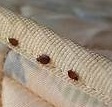
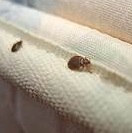
BB3 BB1To be successful in ridding the problem, you must identify the problem and the area of infestation. So it is paramount to know how to identify bed bugs.  Adults can easily be seen with the naked eye. Adult bed bugs are reddish brown in color, wingless, and are about the size of an apple seed. Immature bed bugs can also be seen with the naked eye although smaller than adults, and translucent whitish-yellow in color. The most difficult life stage to see is the first instar nymph. This is the youngest life stage that hatches out of the egg. These nymphs are so small that they are difficult to see unless they are moving or have recently fed (bright red when full of blood). Bed bug eggs are also tiny, about the size of the head of a pin. The eggs are pearl/white in color.

You will need a few simple tools to complete your inspection, first of all a strong flashlight is a must; other tools could include a screw driver set, wrench set or pliers, and a hammer. Some furniture disassembly may be required.

Start the inspection by carefully removing all bed linens and them removing the mattress standing it up to inspect each tuff and pleat, doing the same with the Box Springs. Next inspect the bed frame by disassembling as much as possible, checking every point of connection, cracks and hiding places, and then the headboard in the same manner. This area is where you are most likely to find evidence and activity.  Next you will need to inspect the night stands, dressers and chests, removing all stored items including the drawers. Inspect all points inside and out. Then move to the chairs, couches and any other furniture items.

Bed bugs are elusive and usually nocturnal (peak activity usually occurs between 10:00 p.m. – 6:00 a.m.), which can make their detection difficult. They often hide in cracks and crevices, laying eggs by the hundreds in fabric seams. Signs to look for, include fecal spots (small dark sand-like droppings that occur in patches around and especially in nesting areas), blood smears on sheets and bedding, the presence molted exoskeletons and the little Brownish – Reddish insect itself.  Although bed bugs can be found one at a time, they tend to congregate when the infestation increases. When done feeding a bed bug will relocate to a place close to a host, commonly in or near beds or couches in clusters which called a harborage area, ready to return for future feedings. These places can vary greatly and include bedding and bed area, luggage, furniture, electrical sockets, electronics, baseboards, picture frames and the list can go on and on. You must look everywhere in the room.

Eradication of bed bugs frequently requires a combination of pesticide and non-pesticide approaches.  Pesticides must be applied according to the label and be labeled for the use against Bed Bugs.  Non-pesticide approaches also known as Mechanical approaches, such as Vacuuming, Freeze Treatment, Steam Treatment, Heat Treatment, Mattresses Wrapping and Laundering, can aid in the control of Bed Bugs. All of that said, completely controlling a Bed Bug infestation can take a number of full treatments using both pesticide and mechanical approaches.

The treatment methods for Bed Bugs include:

  • Pesticide Application, with an approved labeled pesticide, following the label directions; crack and clevis treatment and or dusting of all voids, furniture and contents in the area where harborage can occur.
  • Fumigation, Fumigation is the most labor intensive and the most expensive although the most effective. Requires a Fumigation Specialist. Items such as plants, open food and perishables, medicine, some special metals, pets, etc. must be removed before treatment begins. Fumigation of specific items can also be done in a container, such as a fumigation trailer.
  • Heat Treatment, to bring the area up to ranges above 140 degrees. This method has some risks of fire, and can break down the properties of some glues and resins. Heat may not always penetrate all areas of furniture. Items such as electronics, plants, medicine, CDs/DVDs, perishables, art, pets, etc. must be removed before treatment begins.
  • Freeze Treatment, Freezing with carbon dioxide snow (dry ice) is a safe and non-toxic method that penetrates deep into cracks and crevices killing bed bugs, eggs and larvae. Freezing is completely dry and can be used on furnishings, electronics, art, etc. You should disassemble the furniture as much as possible.
  • Steam Treatment, Steam is of course heated water which can be very effective if applied correctly, focus on the carpet, seams of bed mattresses and box springs, drapes along with other furniture. You should disassemble the furniture as much as possible.
  • Vacuuming, Vacuuming can be very effective; because you can remove what you can see, but keep in mind that vacuuming alone will not solve the problem. Vacuuming to include; the carpets, drapes, every piece of the furniture at all points of fabric, cracks and joints. You should disassemble the furniture as much as possible.
  • Mattresses Wrapping, Covering the Box Springs and Mattress with a Bed Bug Cover, the better covers will have a zipper that can be locked and secured. Any bugs missed or hiding will be contained to die and new activity can not penetrate.
  • Laundering, Place all bed linings and clothing from the infested area into a plastic bag and tie it shut, take them directly to the washer, they must be washed in Hot Water and Dried on the highest setting.

So get that Vacuum and Steamer out and don’t give up, and remember to discard the Vacuum bag after each use.

And by the way, boric acid is not effective against bed bugs, because bed bugs do not groom themselves as other insects do.

Rob Cloyd – Twelve Years’ Experience as a Pest Control Operator and Gem Supply’s Director of Business Development/Customer Service.

Loading

Tips to Keep Your VCT Flooring Looking Great, from CleanLink

Tips to Keep VCT Flooring Looking Great

Vinyl composition tile (VCT) is one of the most common types of hard surface floorings cleaning professionals will encounter.  It is durable, relatively easy to clean, and inexpensive when compared to most other floor types. However, when working with a new VCT floor, maximizing the floor’s benefits will depend on how well it is cared for from the very start.

To help, Powr-Flite focuses on techniques to keep VCT floors looking their best from the start, helping to save time, energy, costs, and protect the environment all at the same time.

“The first thing to do [with a new VCT floor] is nothing,” says Mike Englund, a cleaning trainer and product manager for Powr-Flite. “Wait a week to allow the adhesives used to secure the floor ample time to thoroughly dry and harden.”

He then recommends the following:
Scrub: Machine scrub the floor to remove soils and any protective coatings the manufacturer may have applied.

Chemical selection: Consider selecting chemicals from the same manufacturer; often, cleaners, strippers, sealants, and finishes from the same manufacturer are designed to work together as a system.

Seal and finish: VCT floors should be sealed and/or finished to protect the floor.  The number of coats depends on such factors as the customer’s expectations, traffic conditions, budget, climate, etc.

Burnish or buff: Decide whether the floor should be burnished or buffed; this will help determine the type of finish required.

“The automatic scrubber selected to maintain VCT is critical,” says Englund.  “It’s not only a matter of maintaining a quality appearance, but the right machine can help keep costs down and worker morale and productivity up.”

Additionally, the size of the floor area to be maintained is another variable to consider.

“[For instance], a six-foot wide aisle can typically be cleaned effectively with a 20-inch machine.  While you might think a larger machine will get the job done quicker, it may only offer a moderate gain in productivity and unless it is used for other purposes, may not be worth the added cost,” he adds.

Click Here to check out all Power-Flite has to offer!


Loading

Your Mobile Phone is Dirtier than You Think! by Patrick Boshell, DebGroup.

Your Mobile Phone Is Dirtier Than You Think

Posted by Patrick Boshell on Wed, Jul 17, 2013
“It’s a well-known fact that cell phones are dirty objects, but just how unclean are they? Fun fact: each square inch of your cell phone contains roughly 25,000 germs, making it one of the filthiest things you come in contact with on a daily basis. That’s something to think about the next time you press your face to your phone.

Ever wonder what objects are actually cleaner than your phone? Surprisingly, toilet seats make the list because they’re usually sanitized often. Watch the video to see how an average cell phone’s bacterial count stacks up compared to other household items,” as reported by Mashables.

Menshealth recently interviewed Dr. Charles Gerba, a professor of microbiology at the University of Arizona who says this is not surprising.   “Nobody ever cleans or disinfects their phone, so the germs and bacteria just keep building up,” he explains. What types of germs? E. coli, as well as influenza and MRSA, a germ that causes rashes and skin infections, Gerba adds.

Bacteria on your phone

As we use our phones frequently it remains warm, creating the ideal breeding ground for bacteria.   “With the advent of touch-screen phones, the same part of the phone you touch with your fingertips is pressed right up against your face and mouth, upping your chances of infection,” Gerba adds.

A recent article explored some of those terrifying germs and summarized details from a study involving 200 phones as published in the “Annals of Clinical Microbiology and Antimicrobials.”  

 “The researchers found that 94.5 percent of the phones were contaminated with some kind of bacteria, many of which were resistant to multiple antibiotics. By also testing the participants’ hands, the researchers were able to show that a significant number of germs were transferred from their hands to their phones, and vice versa. In fact, about 30 percent of the bacteria on the phones ended up on the owner’s hands.

Much of the disease-causing bacteria they found are transferred from person to person through touch, which means that once this bacteria is on your hands, you only have to then touch your eyes or nose for the bacteria to find an easy route into your body. This is especially frightening when you consider how often your phone hangs out only millimeters away from your face.

The wide spread use of mobile phones by healthcare workers has become a question of concern.  A recent study study on mobile phones and Nosocomial infections reported, “HCWs’ mobile phones may serve as reservoirs for microorganisms that could facilitate the transmission of bacterial isolates from one patient to another in different hospital wards.  Whereas strict attention is paid to changing clothes, removing jewelry, undertaking hand hygiene measures (WHO 5 Moments), and storing personal objects in changing rooms to reduce the transfer of microorganisms from the external clinical environment into the operating environment, most expensive mobile phones often accompany staff into the operating environment as currently no local policy restricting the use of mobile phones in clinically sensitive areas is in place. This lack of attention may be indicative of little awareness about potential risks posed by mobile phone microbial contamination and their role as vehicle for transmission of infections.”

Mobile Phones in Healthcare

The report went on to recommend, “Restriction of mobile phone use in clinically sensitive areas, such as operating environment and ICU as a start point, is recommended. Moreover, screening of HCWs’ mobile phones inside the hospital should be done while doing environmental screening.”  This would be supported by, “A major educational campaign to raise awareness” and recommendation that “mobile phones could be produced with protective material against contamination.”

A new Practice Guideline was issued by the Community and Hospital Infection Control Association (CHICA-Canada) to address the issues of electronic devices in healthcare settings. Recommendations coming out of that guideline include the following:

  1. Hand hygiene should be performed between patient contact and before and after accessing a device.
  2. Manufacturer’s guidelines for use, cleaning/disinfection and maintenance should be reviewed to ensure these guidelines meet the standards for cleaning and low-level disinfection that are necessary for exposure to Multi-Drug-Resistant Organisms.
  3. Items that cannot be adequately cleaned should not be used, or should be designated as “clean” and not be accessed in patient rooms or be touched by patients.
  4. If an item cannot be cleaned with a hospital-grade disinfectant and is necessary for patient care, a risk assessment should be done with infection prevention and control to determine the best approach to mitigate the risk of transmission of microorganisms.
  5. All touch-surfaces of IT devices used at, or near, point-of-care must be cleaned and disinfected with a hospital-grade disinfectant if used or touched during the encounter with the patient.
  6. The surface of telephone components, pagers and computer ‘mice’ should be cleaned in a manner that prevents damage to internal systems from excessive fluid.
  7. If an item cannot be adequately cleaned and will be accessed in a patient room or touched by patients, it requires a cleanable cover.
  8. The user/owner of the device is responsible for routine cleaning and disinfection of the device and that  responsibility must be clearly communicated.

Loading

With Dabs and Touch-Ups, Speed Cleaners Get the Job Done Companies Cater to New Housekeeping Needs With Wider Sprays and One-Handed Dispensers from the Wall Street Journal

Packaged products giants are increasingly catering to people whose cleaning style is to clean with a million touchups in as little time as possible. And they are willing to pay for products that help them do this. Ellen Byron has details on Lunch Break. Photo: Clorox.

We are eating faster, talking faster, driving faster. So it stands to reason we want to clean faster too.

Unwilling to engage in housecleaning marathons, consumers have a new strategy—frequent bursts of mess-busting touch-ups. Cleaning a kitchen counter or bathroom sink now often happens with a passing swipe. Plates get wiped with a sponge and a squirt of soap. Floors get washed one spill at a time.

The change is creating a nation of housecleaning multitaskers who can clean a stovetop, cook and chat on the phone at the same time. They have a high tolerance for rooms that are works-in-progress—and a low tolerance for Saturday afternoon scrubbing sessions.

Consumers used to clean the way their mothers showed them to. But the shift to speed cleaning is happening so fast that companies are racing to keep up. Makers of cleaning supplies, who translate a slight change in human behavior into billions in sales, are tracking the shift closely, updating decades-old products and inventing new ones.

The most common and fastest-growing cleaning technique is touch-up cleaning, defined as a task that takes 15 minutes or less, according to research from SC Johnson & Son Inc., maker of products including Windex and Pledge. Touch-ups now account for 70% of all cleaning, up from 40% five years ago.

Asaf HanukaMeet the speed cleaners.

“People used to have a day of the week when they did a thorough cleaning top to bottom,” says Beth Simermeyer, senior vice president of SC Johnson’s North America home-cleaning business. “That is very uncommon these days.”

Products geared to fast cleaners include wipes that clean more surface types, wider sprays and new pump dispensers for one-handed dabbing. Spray bottles cast a wider spritz and sponges are more amenable to small jobs. Fast-cleaning consumers, who are mostly women, are willing to pay for products that meet their needs, SC Johnson says.

“There are more single-parent households, more multigenerational living, smaller living spaces, fewer children in the home—all of that has had an impact on cleaning,” says Vicky Purnell, senior director of global insights for Clorox Co.’s CLX +0.73% cleaning division.

More people are willing to live in imperfectly kept rooms. “Think about how involved parents are in their kids’ lives these days. They don’t want to spend all their time cleaning,” Ms. Purnell says. “Messy is OK, as long as it’s sanitary.”

After Melissa Sachs Fitzpatrick puts her two young sons to bed at night, she starts her 20-minute dash. She grabs a spray cleaner and paper towels and wipes down the kitchen island, countertops, table and chairs. She gives a quick scrub to pans and cutting boards that weren’t washed during the dinner prep, loads the dishwasher, sweeps up food that fell from the dinner table—and then it’s on to the playroom and the bathroom for a drive-by tidying up.

“Ninety-five percent of the time, incremental cleaning keeps my house OK,” says Ms. Sachs Fitzpatrick, 36, who handles communications for a real-estate investment trust in Denver. “I work full time, so I never want to take time away from my kids to clean.”

Asaf HanukaProcter & Gamble says 60% of consumers use the ‘quick clean’ dishwashing method, squirting a few drops of soap onto the sponge rather than filling a sink with suds.

Procter & Gamble Co. PG +1.22%researchers found fast-cleaning consumers hate to spend time scouring dishes or waiting for them to soak. “When we were kids, the majority of the country used to drop in some dish liquid, fill up the sink with water, soak all of their dishes and then after a bit of time clean them, rinse and place them in a drying rack,” says Sunny Jain, P&G’s marketing director for Dawn and Cascade. “Today, consumers just don’t have time for batch-processing.” In June, P&G introduced Dawn Platinum dish soap, which claims to provide the equivalent of an overnight soak in three minutes.

Fast cleaners may dislike cleaning, but P&G researchers found in 2009 that they were actually cleaning more often on average, with more-frequent touch-ups and deep cleaning jobs than in 2005. Other companies have found consumers rely on touch-ups in order to deep-clean less often.

When Clorox overhauled its spray-bottle design in January, it widened the span of the spritz for brands including Formula 409, Tilex and Clorox. The new design lets consumers work faster, Clorox says, and follows company studies of the shrinking amount of time Americans spend cleaning the bathroom and kitchen each week. In 2011, the average task lasted just under seven minutes, compared with nine minutes in 2004.

Fast-cleaners love to multitask, especially at dinnertime. They like to clean up as they cook, says Matt Barresi, North America marketing director of P&G’s Bounty brand. While preparing dinner they may also be searching for a recipe on a cellphone or laptop, listening to the TV and helping with homework.

An accidental spill has the potential to upset the balance, P&G research found. If a paper towel doesn’t come off with a one-handed tear, for example, the other hand has to get involved, which requires the mobile device or cooking utensil to be put down. If the sheet doesn’t fully absorb the spill, the consumer’s hand gets wet, requiring a trip to the sink for a quick rinse and the use of yet another paper towel. If that sheet drips on the way to the trash can, all activity will come to a full stop, as the consumer cleans up yet another small mess.

“You can see it in their body language—she exhales, her shoulders drop and she’s frustrated,” Mr. Barresi says.

In February Bounty introduced DuraTowel, a more-absorbent paper towel resembling a dishcloth, which can be easily torn off with one hand. “It allows her to do it all in one swipe,” Mr. Barresi says.

And with a “Select-A-Size” version of Mr. Clean Magic Eraser sponges, users can break off a small piece to tackle a touch-up without wasting a whole sponge. As a result, people use the product more frequently, says Scott Beal, associate marketing director at P&G for Mr. Clean and Swiffer brands. “Consumers were inclined to save up Magic Erasers for a worthy deep-clean type of job, or in some cases they were cutting them up for small jobs,” he says.

SC Johnson executives describe modern multitasking as being “in the flow.” To accommodate “the flow,” the company in January introduced Windex Touch-Up Cleaner, which dispenses with a one-handed pump on top of the bottle.

The short Touch-Up bottle resembles a hand-soap dispenser, so consumers are tempted to leave it on the counter—and use it more often. That eliminates the time and effort required to take the bottle out and put it away. “It sounds like a small thing but it matters,” says SC Johnson’s Ms. Simermeyer.

SC Johnson took pains to keep the pump extra smooth and make the bottle sturdy so it won’t tip over during a one-handed dab with a sponge. “If you’re holding a baby, talking on the phone or making dinner, you can still get a little cleaning done,” Ms. Simermeyer says.

Fast-cleaning consumers like one or two multipurpose formulas rather than an arsenal of specialty cleansers. Clorox introduced its wipes in 2000 as a bathroom cleaner and has gradually adapted the formula to be compatible with more types of surfaces. Today a Clorox wipe can clean stainless steel, finished hardwood, glass, mirrors and sealed granite. The latest formula upgrade, in January, makes it better at tackling kitchen grease, the company says.

“Wipes are the darlings of most modern cleaners,” says Clorox’s Ms. Purnell. “It lets consumers clean where they want to when they want to in a matter of seconds or minutes.”

Written by: Ellen Byron, Wall Street Journal

Loading

Standard Validates Cleaning Procedures, CleanLink.com

Standard Validates Cleaning Procedures

By Bill Balek 

In developing a standard that validates cleaning procedures, ISSA and CIRI followed a broad multi-stakeholder process designed to garner the input of all major stakeholders in an open and transparent manner. The Clean Standard: K-12 development process allowed for stakeholder involvement by participation on either the Development or the Stakeholder Committees, whose decisions were based on consensus.

These committees are comprised of industry members (manufacturers, distributors and cleaning service providers), major school districts, unions such as the American Federation of Teachers, and NGOs and non-profits such as the Healthy Schools Campaign, the National Education Association, APPA and the National Association of State Boards of Education.

The development process has been guided and informed by independent research, which included extensive scientific measurements from a multiyear review of cleaning procedures in numerous schools across the United States. The data clearly indicates that a standardized approach to the measurement of cleaning effectiveness across critical surfaces (recognized as presenting health risks in schools) could be used to improve the hygiene of interior school surfaces and help improve the school’s overall indoor environmental quality.

Specifically, the research has validated ATP meters as a way to measure the level of cleanliness of school surfaces and perfect cleaning procedures. In addition, the research has produced reasonable range values for measuring levels of cleanliness in K-12 schools across three different ATP meters, representing a standardized and quantitative approach to measuring cleaning procedures.

The Clean Standard provides schools with a framework and a standardized protocol for using ATP meters to measure and assess cleaning effectiveness on a consistent and periodic basis. Perhaps more importantly, it provides a structured approach to addressing situations where the facility has fallen below the desired level of cleanliness.

Adenosine triphosphate is recognized as an excellent marker for monitoring biologically-derived surface soiling and cleanliness. Most surfaces collect and retain soils, dusts and various deposits containing myriad particles, residues and fragments of some biological origin. These residues may derive from plants (such as pollens, fibers, dusts, fungi, etc.) and animals (skin cells, dander, insect parts, secretions, exudates, etc.), as well as other microorganisms that are environmentally ubiquitous.

By basing the metric of “clean” on ATP levels on interior surfaces, one is practically covering all surface residual contamination of biological origin. However, it is important to note that ATP monitoring is not appropriate for the identification of specific, non-biological and other pollutants that are recognized and regulated as human health hazards. Examples include lead, asbestos and pesticides.

ATP cannot identify specific bacteria, virus or fungi that may serve to be human pathogens. However, during research, RODAC measurements (a recognized means of detecting and measuring the presence of microorganisms on surfaces) were taken contemporaneously with ATP measurements. The research compared ATP and RODAC measurements and clearly established that a reduction in culturable bacteria as measured by RODAC was consistent with the reduction in ATP values after cleaning.

Purpose Of The Standard

The Clean Standard: K-12 establishes a framework for assessing the cleaning procedures and cleanliness of a school’s interior high-touch surfaces. The primary methods used for this assessment is a site survey and quantitative measurements based on ATP meters to determine what is biologically soiled. The assessment is designed to provide information showing the initial extent of contamination and the level of biological contaminant removal when cleaned. It should be used for the ultimate purpose of improving the quality of the indoor environment for the benefit of both students and staff.

The standard provides a systematic approach based on multiple elements that are used to measure the level of cleanliness and monitor cleaning procedures at K-12 facilities related to residual surface contamination of biological origin.

Specifically, the Clean Standard includes the following elements:
• A site survey or building audit;
• Evaluation of the presence of visual dust and soils;
• Pre-cleaning and post-cleaning evaluations and measurements based on ATP measurements; and
• Periodic measurement of bio-contamination or bio-soil loads using ATP.

These elements are intended to be used in a systematic process to determine the background condition and pre-existing soiling loads in any school, as well as the level of cleanliness achieved after cleaning. They also provide periodic measurement of cleanliness at the school facility.

Training will be a key component in implementing the Clean Standard at any school. It will verify that ATP measurements are conducted in a correct and consistent manner to ensure accuracy of the results.

The collective elements of the Clean Standard: K-12 will make it possible to assess the effectiveness of any commercial cleaning regimen, equipment, products and procedures. As such, the standard empowers schools to select a cleaning regimen that is the most effective and economical.

Bill Balek is the director of environmental services and legislative affairs for ISSA, Lincolnwood, Ill. More information on the Clean Standard: K-12 can be found at www.issa.com and at Gem Supply Company, www.gemsupply.net

Loading

Clean Standard Measures Cleanliness in School, by Bill Balek, from CleanLink.

Clean Standard Measures Cleanliness In School

By Bill Balek 

Elementary and high school facilities across the United States pose health risks to students and staff due to the lack of a standardized approach to assessing the effectiveness of their cleaning regimen. A vast majority of facilities judge cleaning by sight, smell and even touch. But this approach is woefully inadequate in this age of MRSA, norovirus and other infectious agents that cannot be detected by the senses alone.

Realizing this serious deficiency of measuring cleanliness in school, ISSA and the Cleaning Industry Research Institute (CIRI) entered into a joint venture,  commissioning an independent body of scientists led by Dr. Richard Shaughnessy, University of Oklahoma – Tulsa, and Dr. Gene Cole, Brigham Young University, Provo, Utah, to perform research intended to provide three deliverables.

The first goal was to identify an objective, quantitative method of measuring cleanliness in school. After thoroughly reviewing various devices, the researchers concluded that ATP (adenosine triphosphate) meters are a valid, relatively simple, rapid and affordable measure of the level of cleanliness of critical interior surfaces in schools. Just as important, these devices were found to be reliable and consistent in their measurements across geographic and climatic zones.

Secondly, ISSA and CIRI tasked the researchers with producing reasonable range values for measuring levels of cleanliness in schools across three different ATP meters, representing a standardized and quantitative approach to measuring clean. With this step, “cleanliness” was defined based on ATP-RLU (relative light unit) values.

Now, ISSA and CIRI will use this information to establish a practical standard and protocol that will empower custodial departments within schools to validate their cleaning regimen, as well as help them more efficiently allocate their limited resources for cleaning and maintenance. This protocol — the Clean Standard: K-12 — is currently in the final stages of development, and is expected to be completed by June 2013.

Overview And Background

The goal of the Clean Standard: K-12 is to provide schools with a useful tool that will help them objectively measure and monitor the level of cleanliness at their facilities, thereby contributing to the quality of the indoor environment for the benefit of students and staff alike.

The Clean Standard: K-12 is performance-oriented and focused on:
• The levels of cleanliness that can be reasonably achieved;
• Recommended monitoring and inspection procedures designed to measure how “clean” a facility is using quantitative measures (i.e., ATP Meters) and traditional methods (i.e., sight, smell, touch);
• How to use these results to evaluate and improve the cleaning processes and products that are critical to maintaining a safe and healthy learning environment for students and staff.

The Clean Standard doesn’t specify or favor any particular cleaning process or product. Instead it focuses on achieving the desired level of cleanliness and provides a systematic approach to inspection in an effort to ensure “clean” is achieved and maintained.

Bill Balek is the director of environmental services and legislative affairs for ISSA, Lincolnwood, Ill. More information on the Clean Standard: K-12 can be found at www.issa.com or by contacting Gem Supply Company at www.gemsupply.net

Loading